For those of us who belong to the land, going to sea does not come naturally. Yet there are men for whom the sea is essential.
Generation after generation, they have climbed aboard their boats and faced the dangers of the ocean — first out of necessity, then by choice, as if salt water had got into their veins.
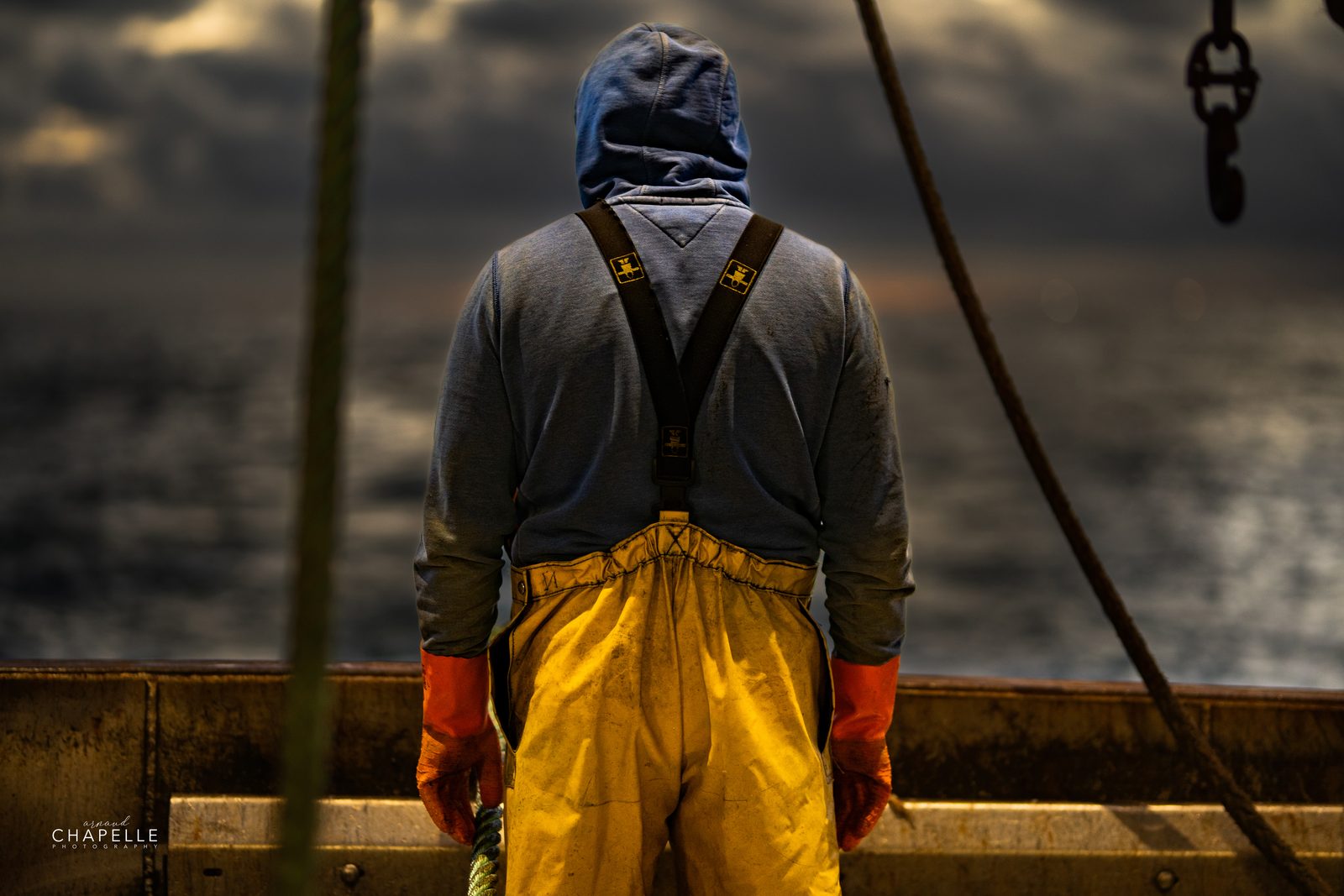
Modern life and our well-stocked fish counters have made us forget how hard the work is: the night departures, the cold, the rain and the gales, the relentless pace.
This is the story of the Télémaque, a scallop dredger from the port of Grandcamp-Maisy, of her skipper Jean-Baptiste Marion and of his crew. I went out with them several times, from November 2015 to November 2022.
November 2015: I will have to trust this sea
My body, used to good old solid ground, is telling me not to go. I have been on boats before, of course, but a ferry is far more reassuring than a 15.60-metre fishing boat.
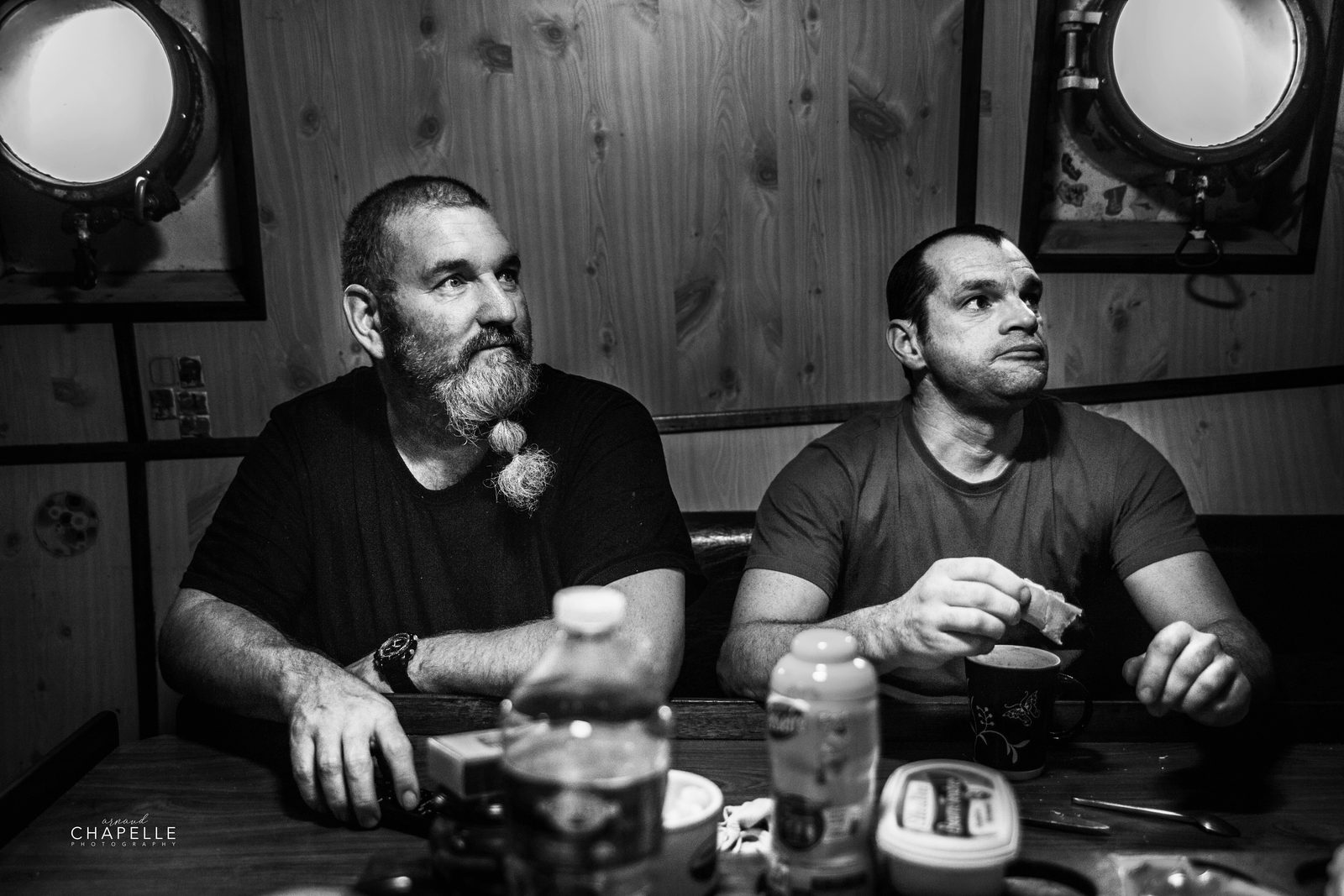
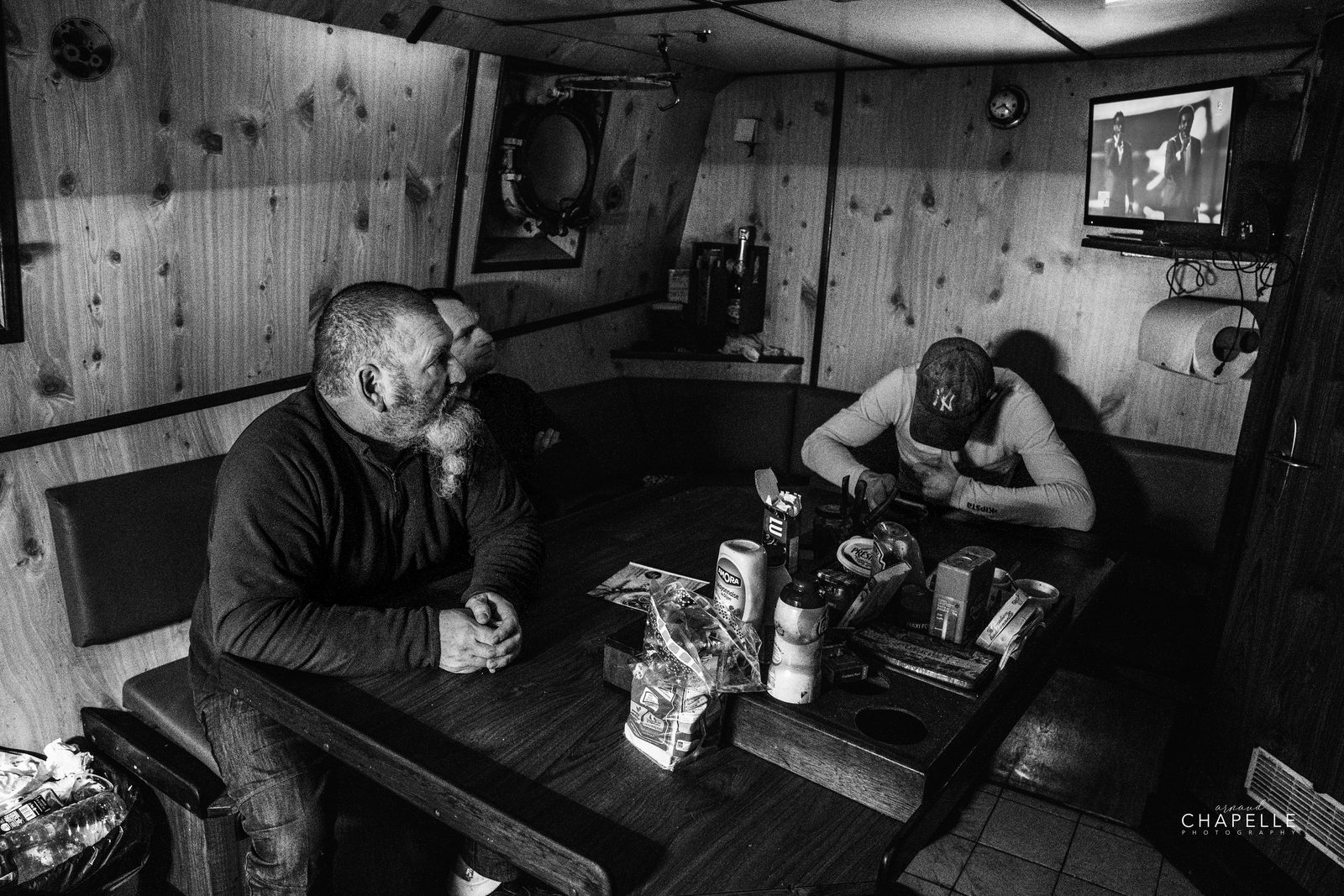
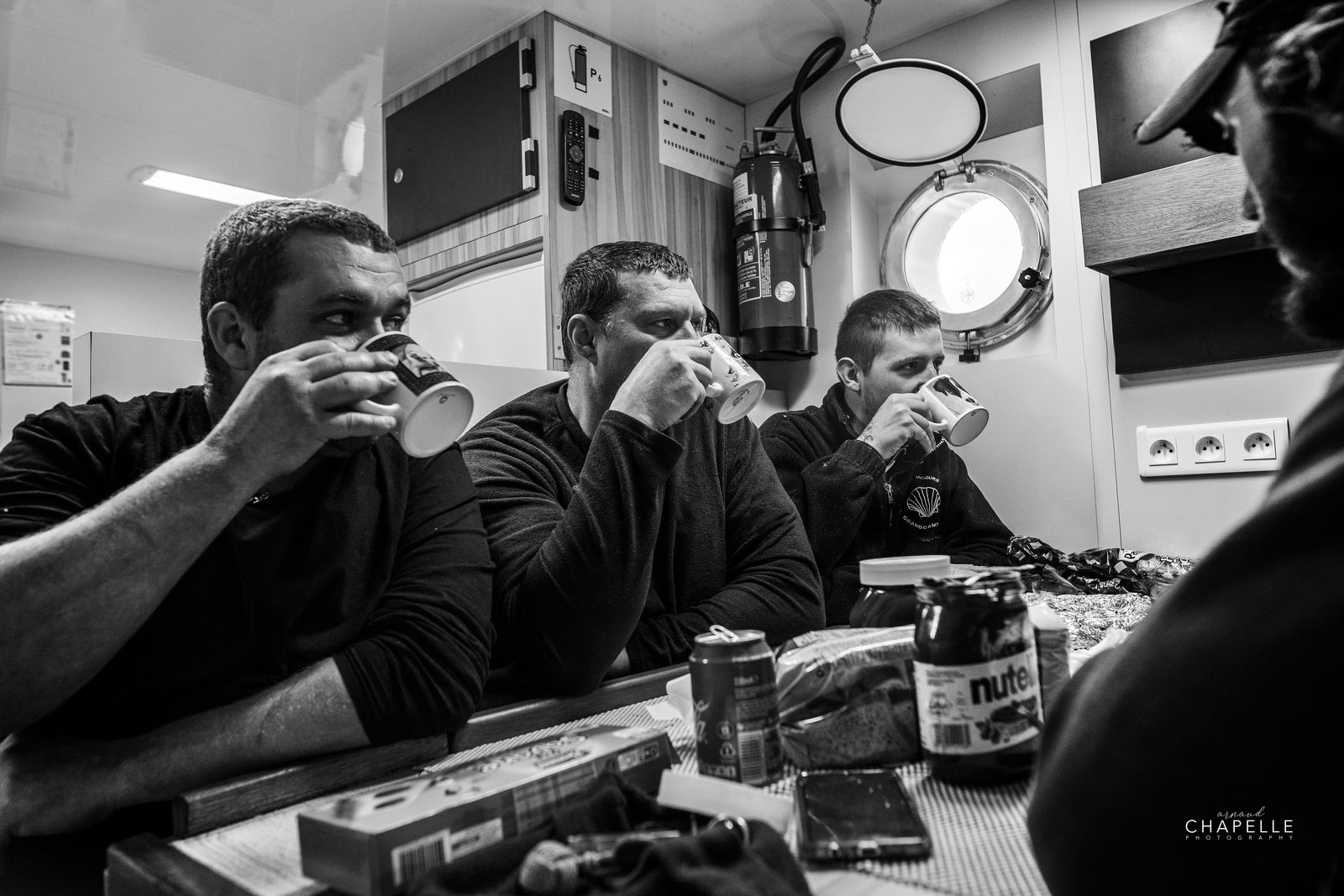
First we have to reach the fishing grounds: two and a half hours at sea. The men sleep, in four bunks up in the bow. Later I will understand why this rest matters so much.
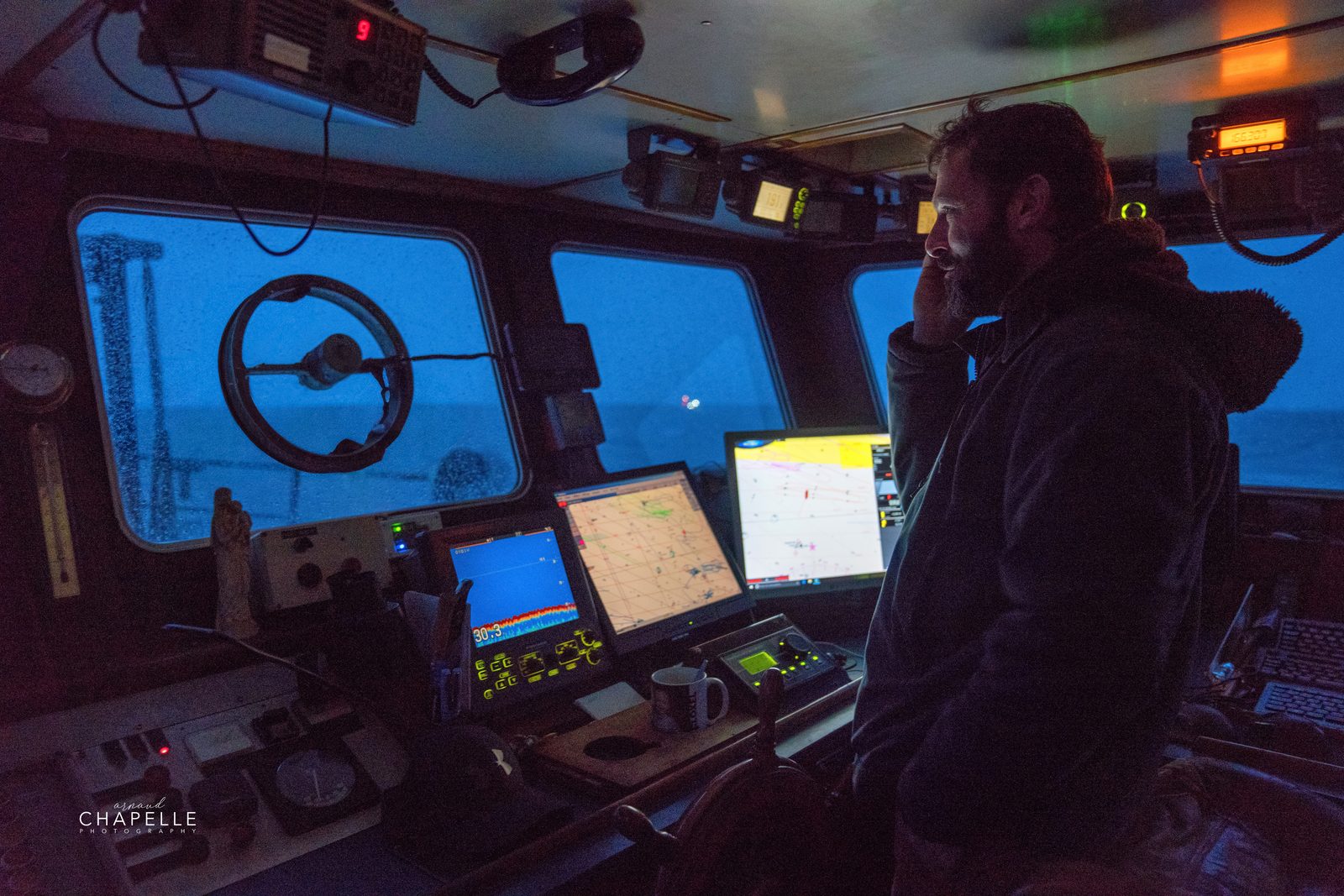
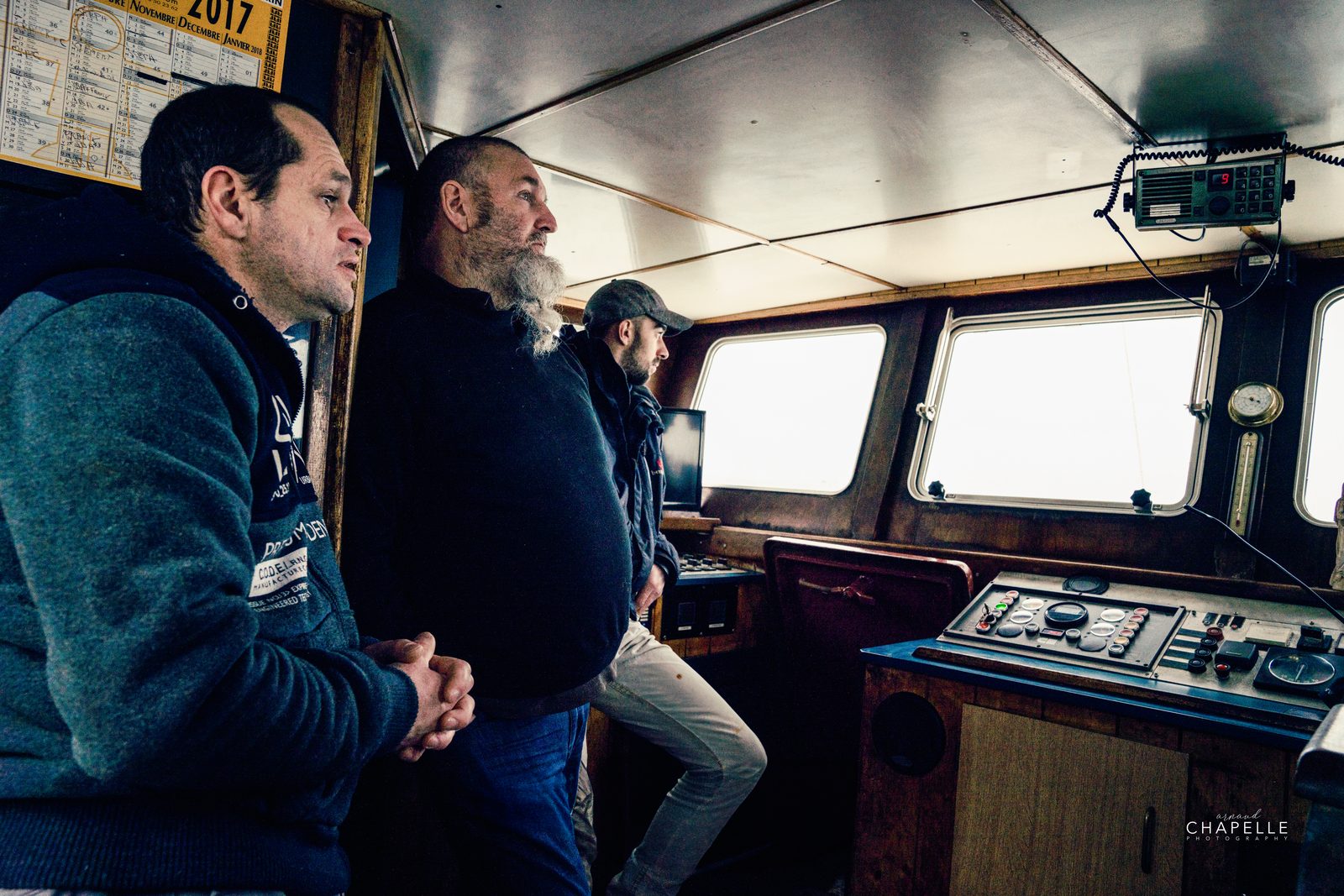
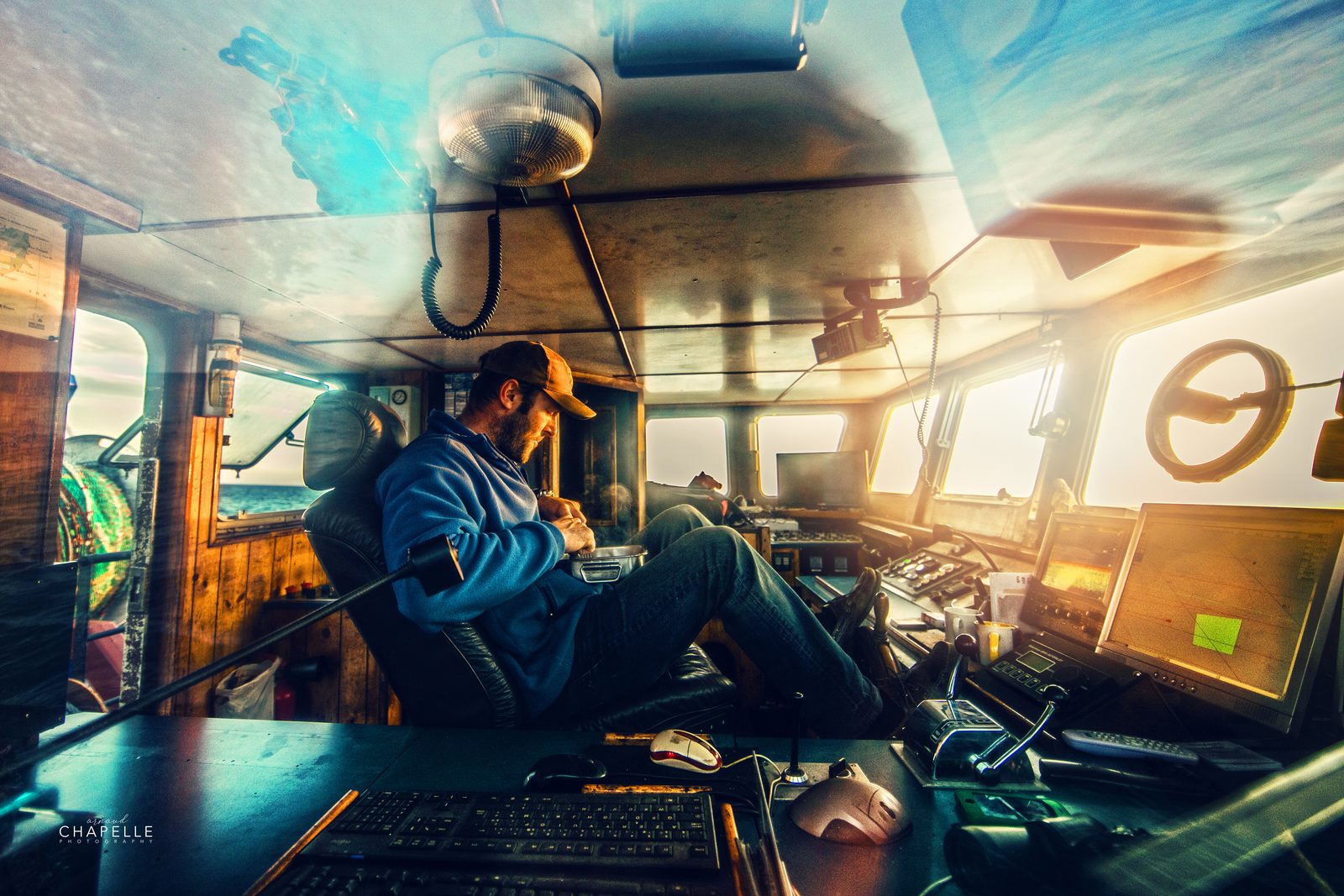
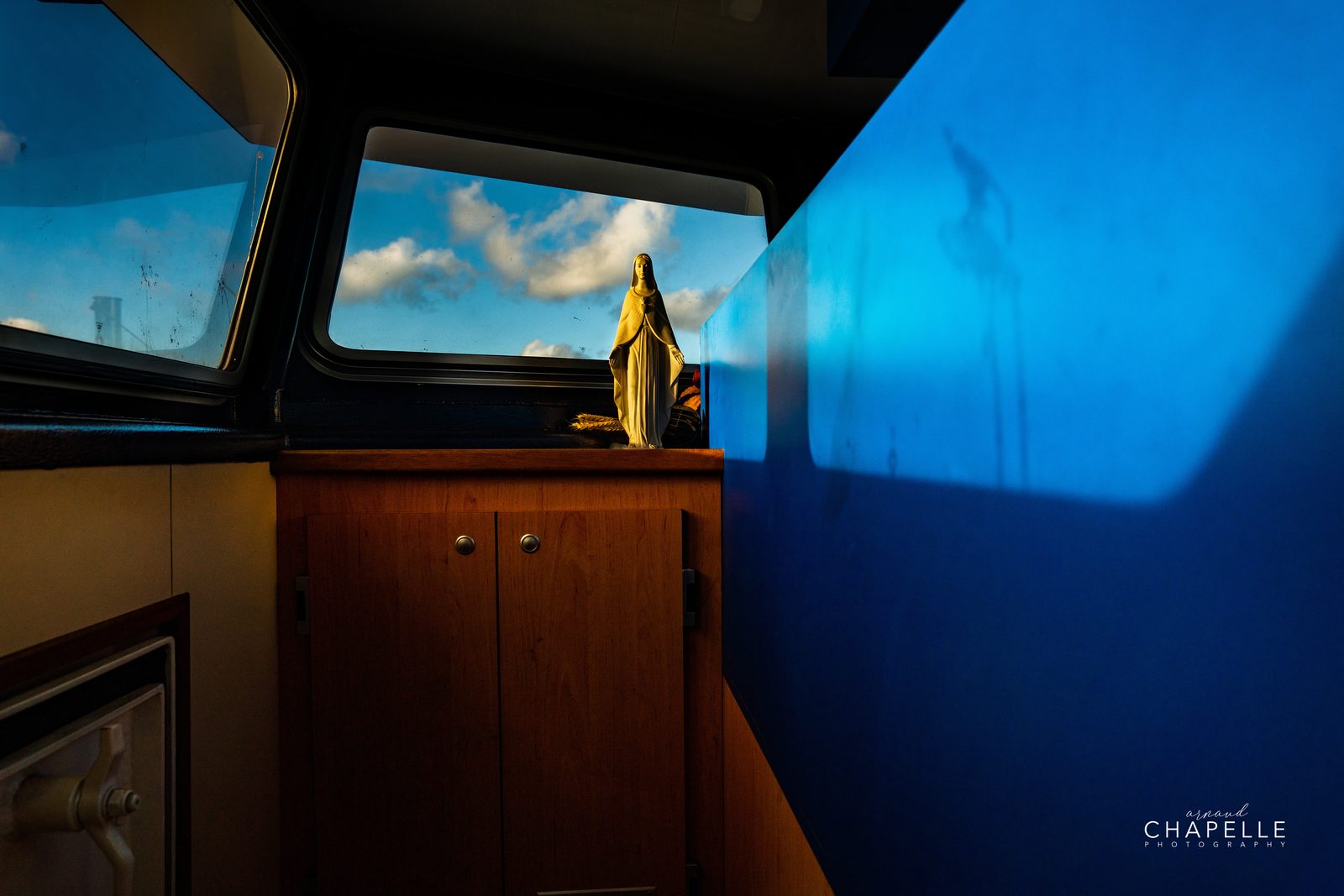
The wheelhouse, five or six square metres packed with electronics, is the heart of the boat. On the radar screens the fleet is gathering: around a hundred boats getting ready to shoot their gear.
That day, it was a day fishing, in a kind sea. Jean-Baptiste, my captain for the day, went easy on me: I was not seasick… phew!
The moment of truth
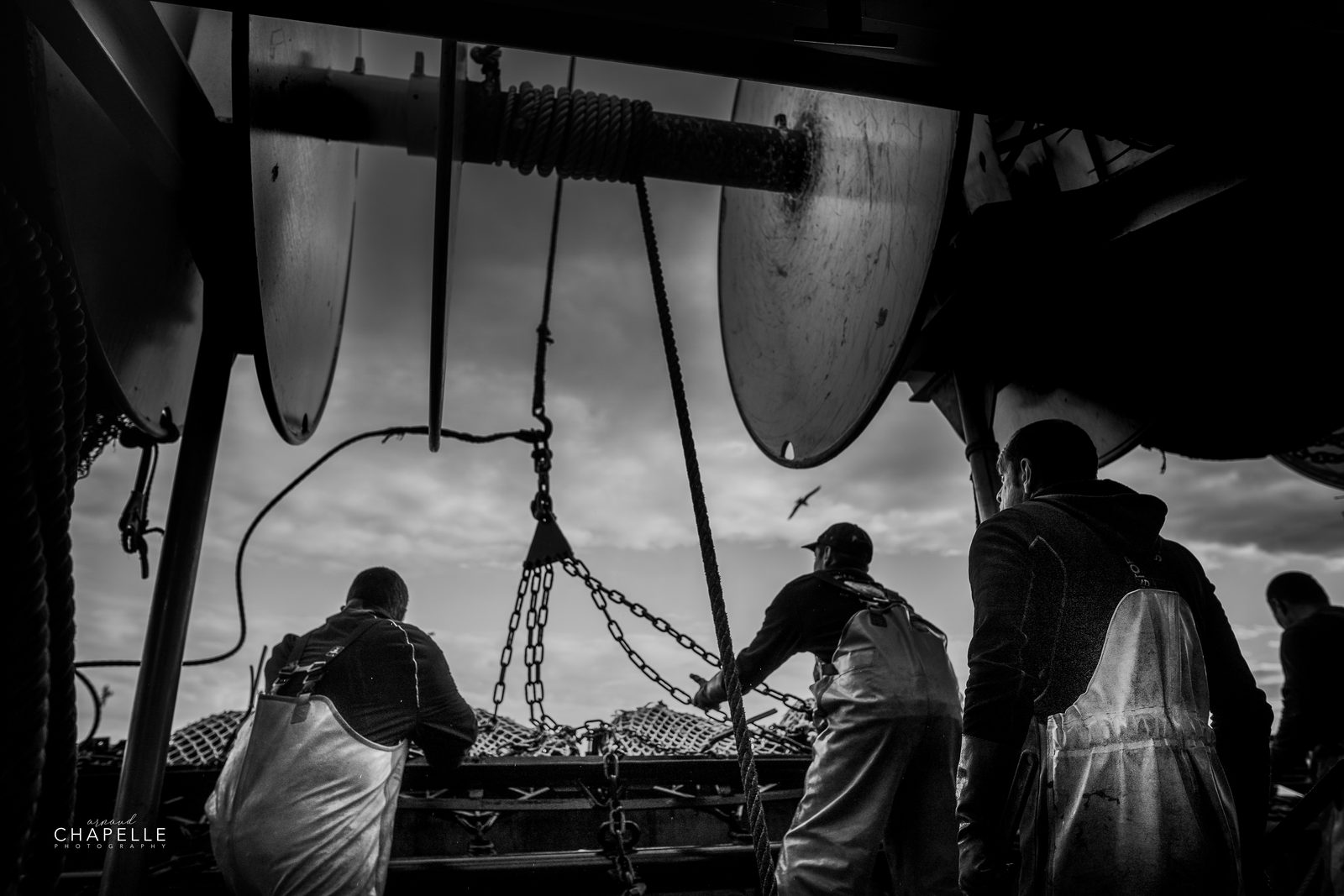
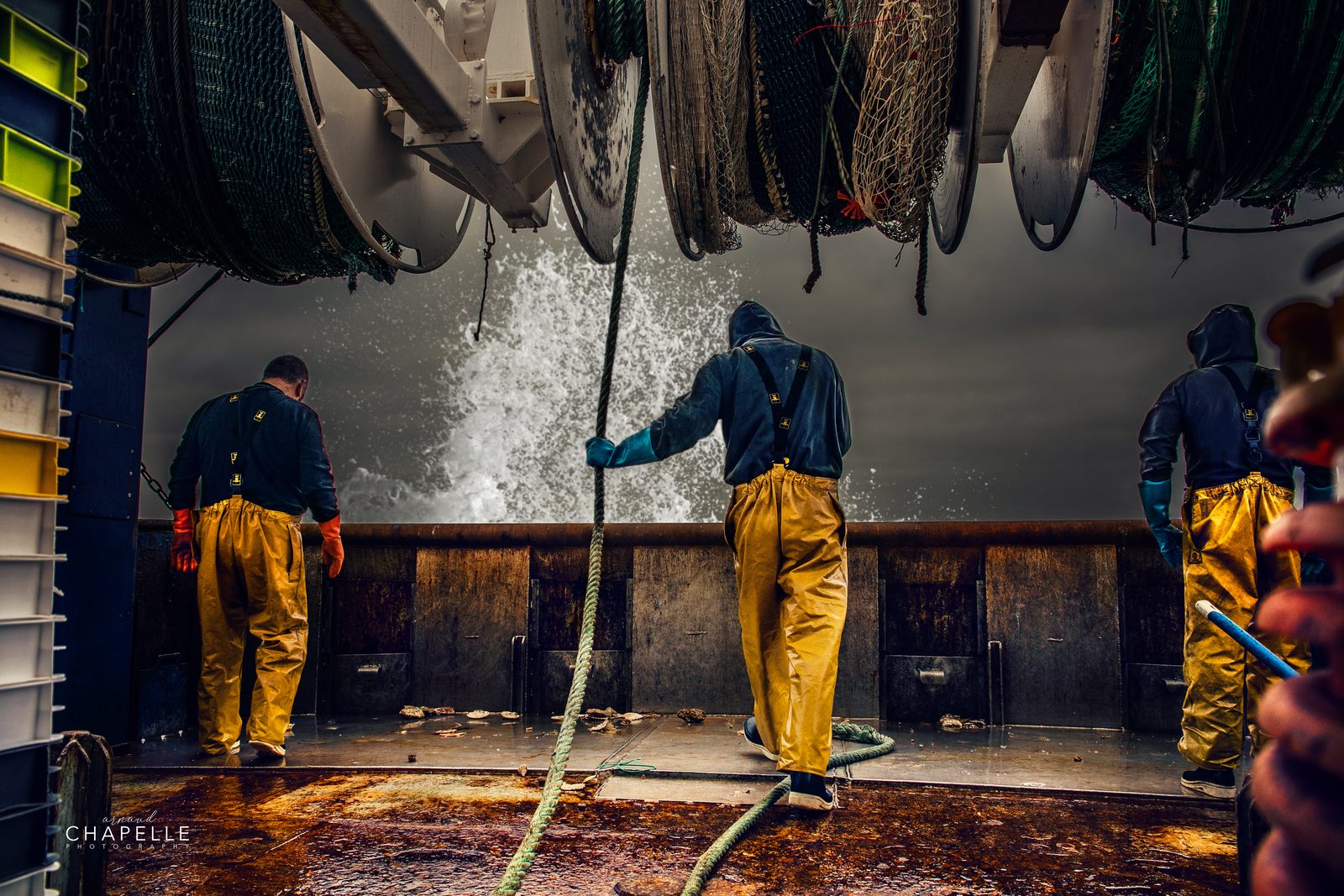
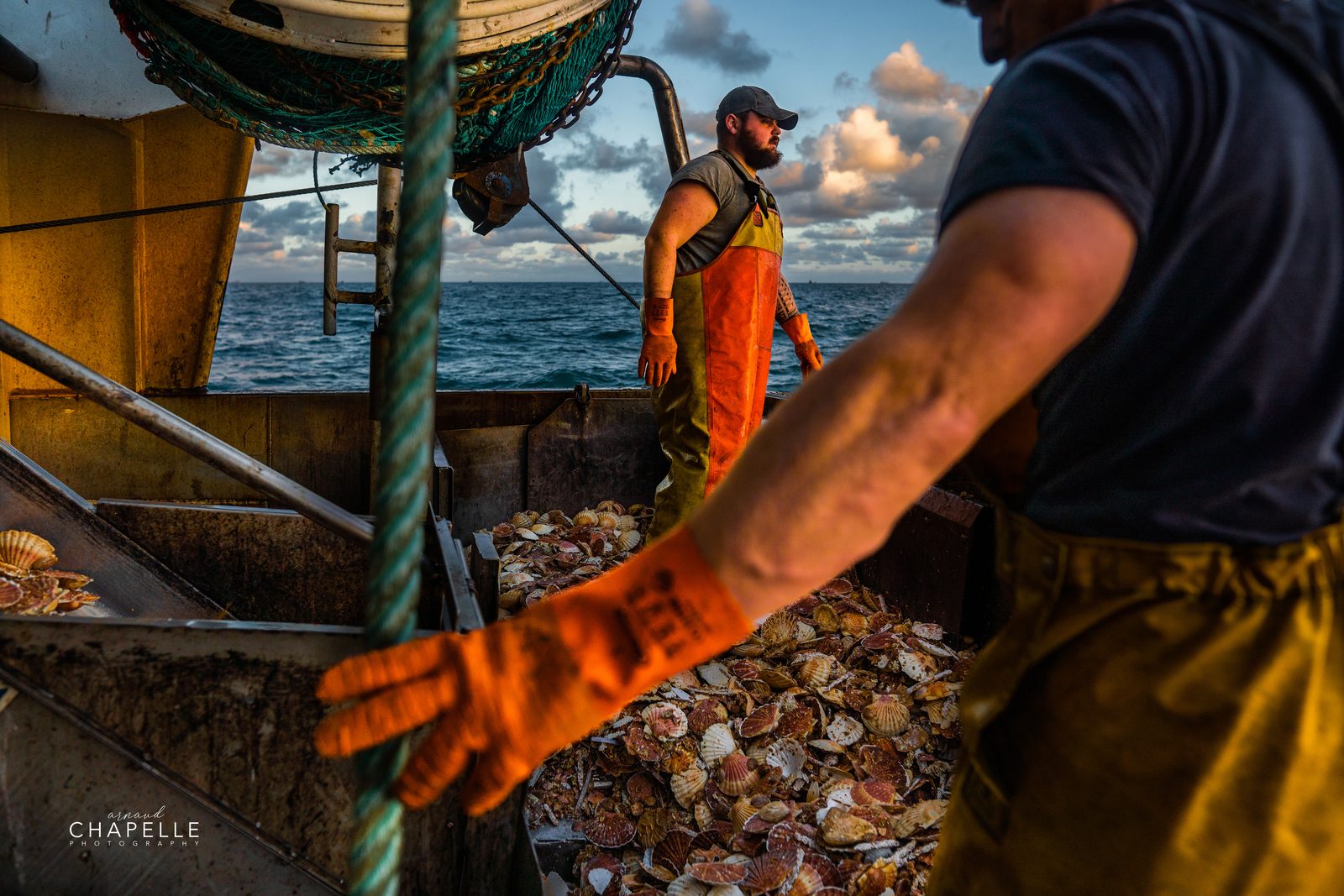
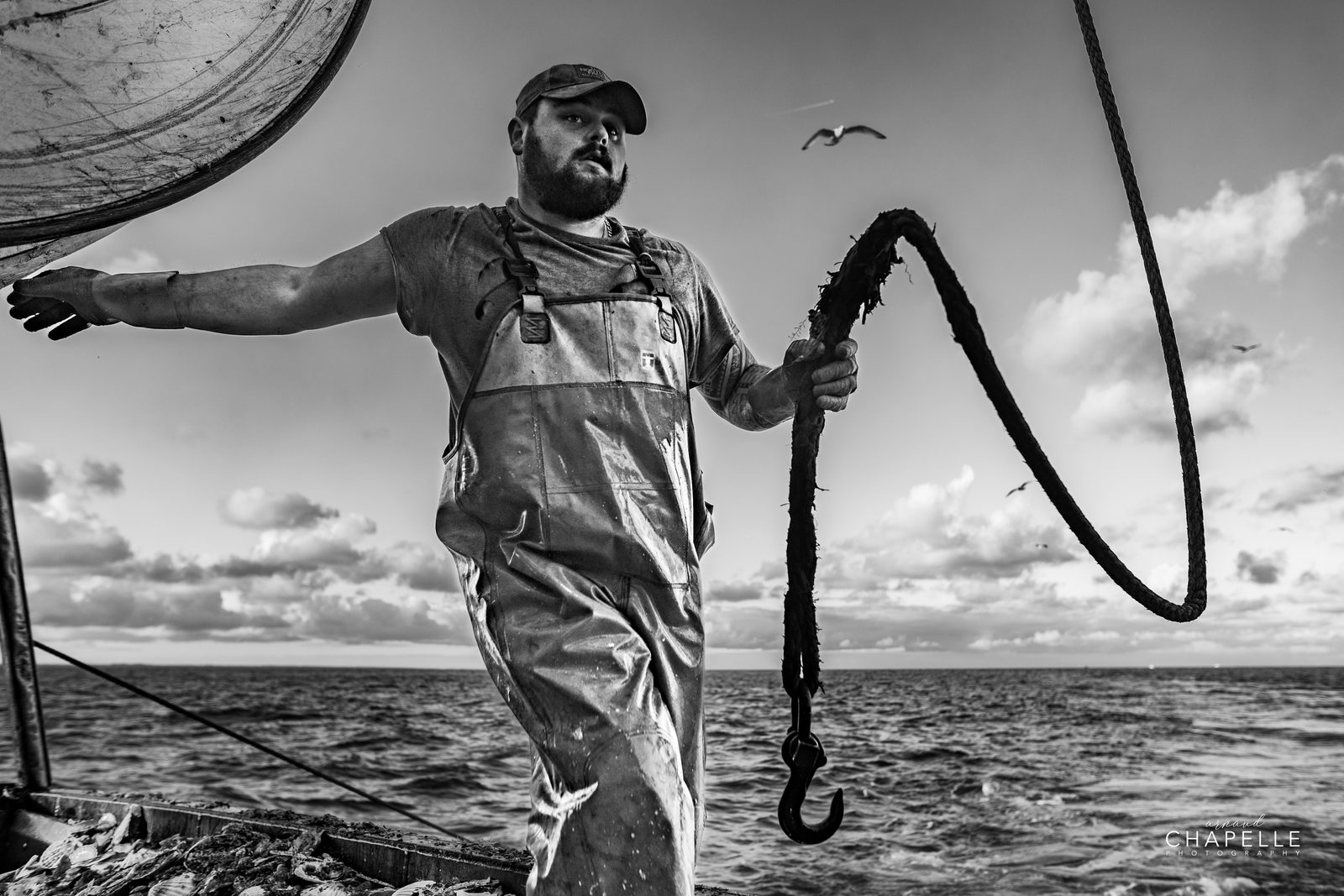
The gear goes down to scrape the seabed in search of scallops. Thirty minutes later, Jean-Baptiste hauls up the first dredge from the wheelhouse. Everyone is in position; each man knows exactly what he has to do.
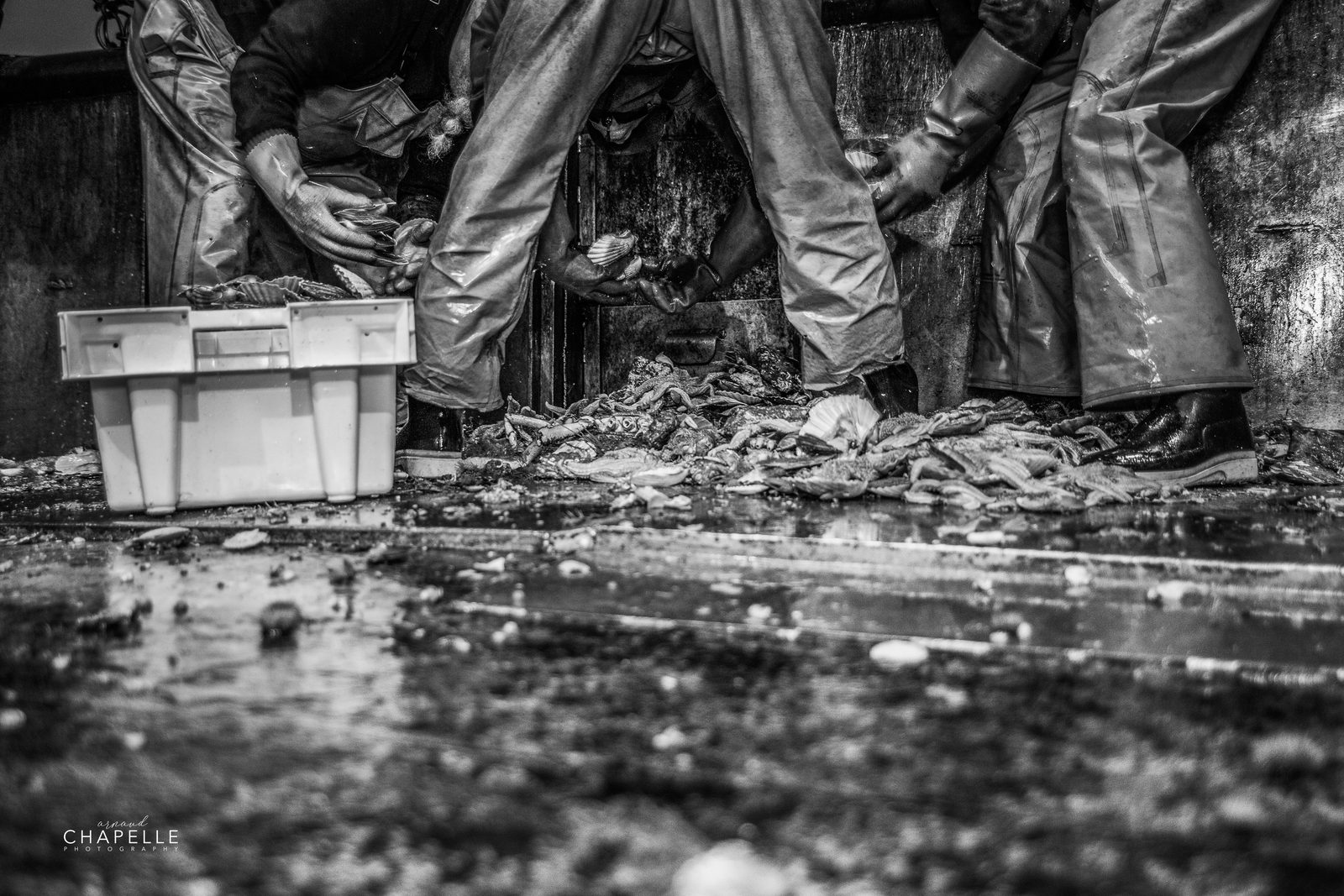
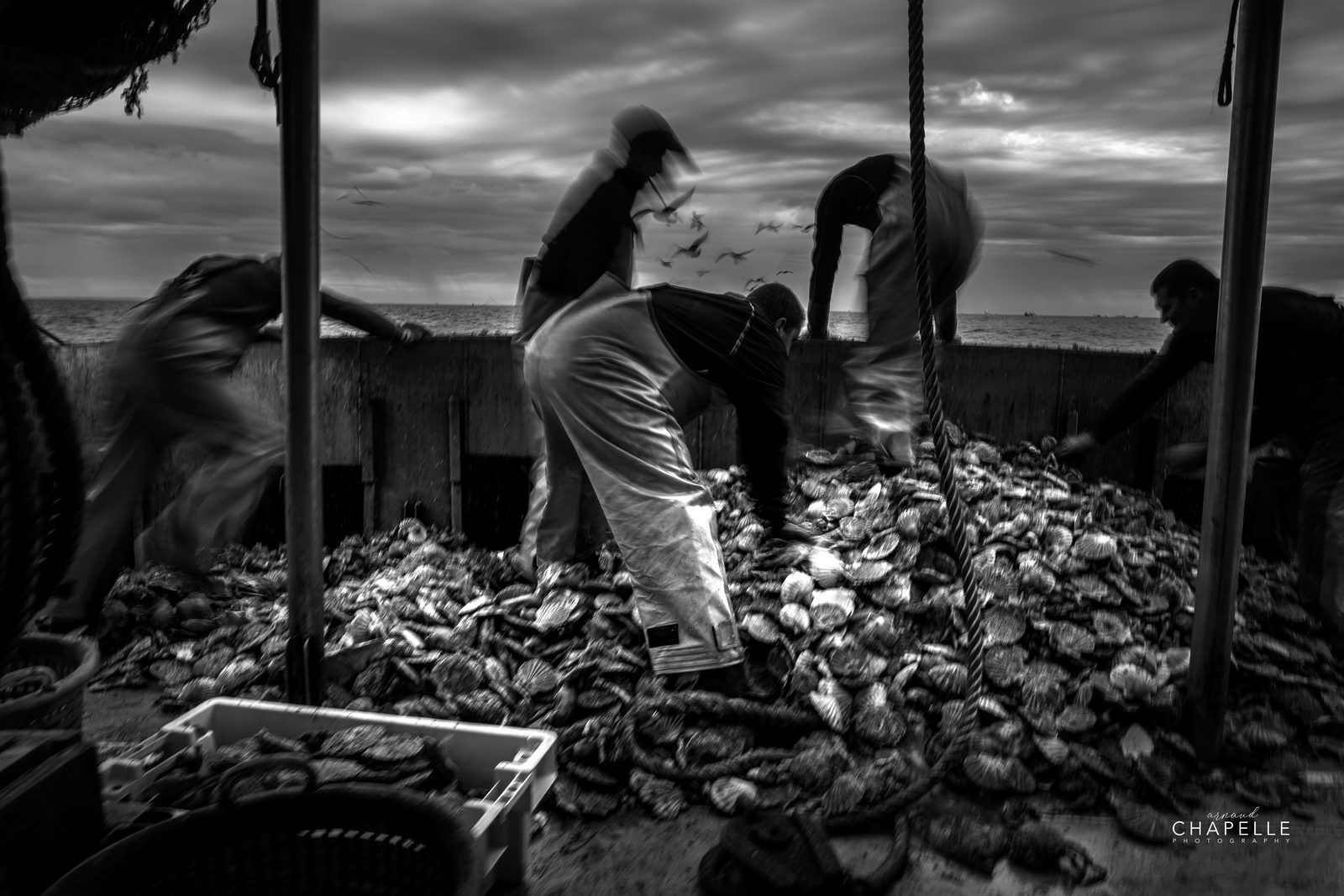
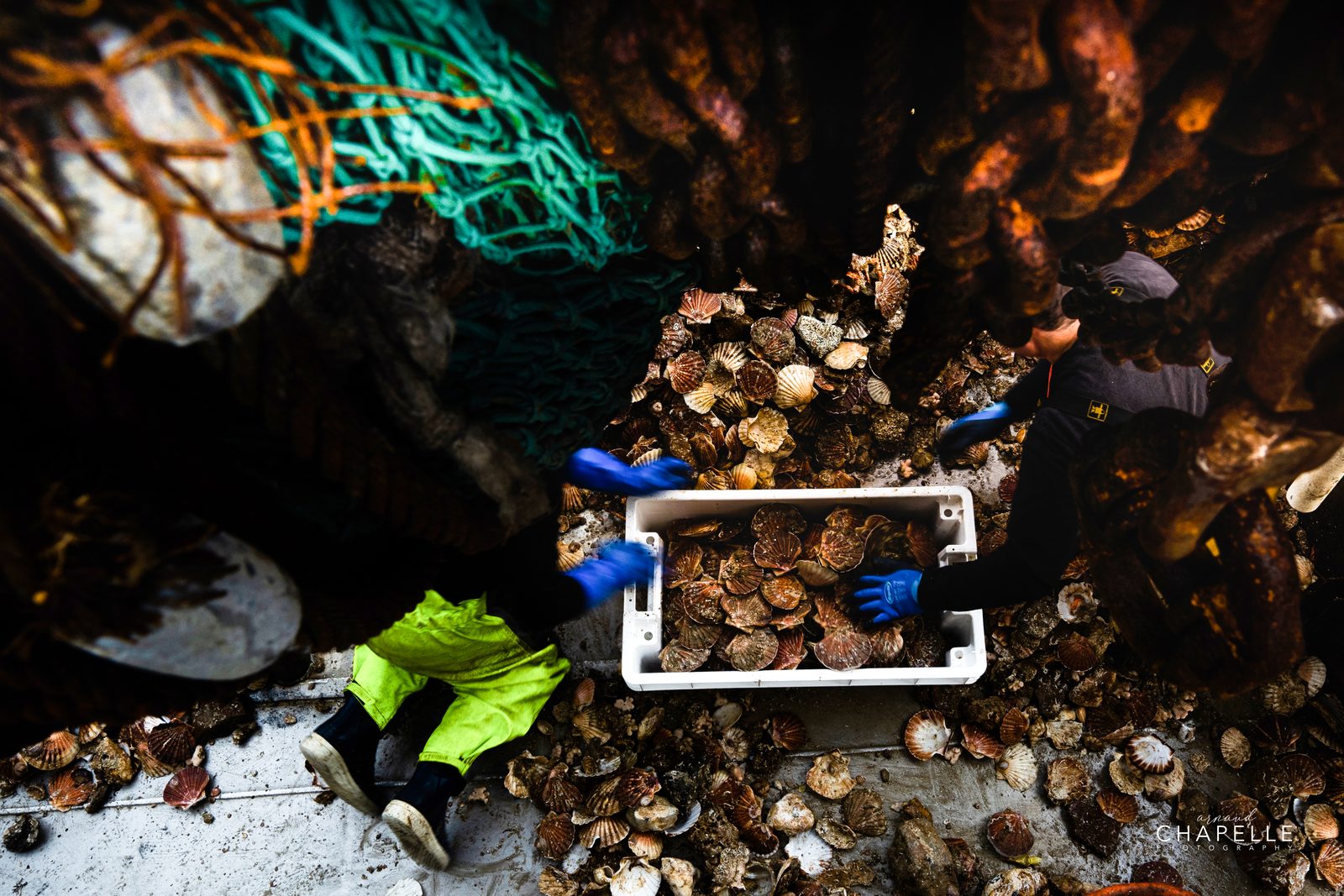
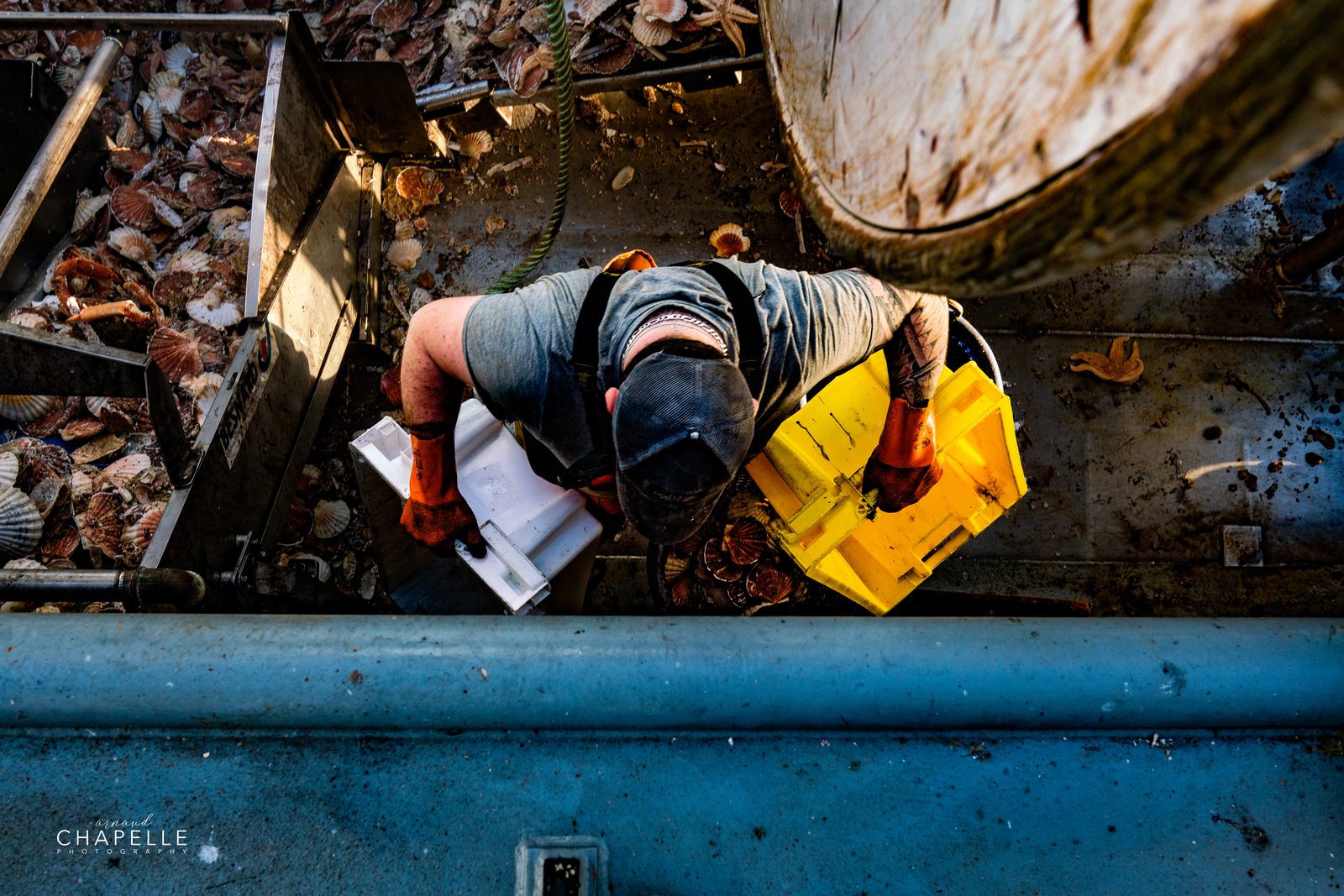
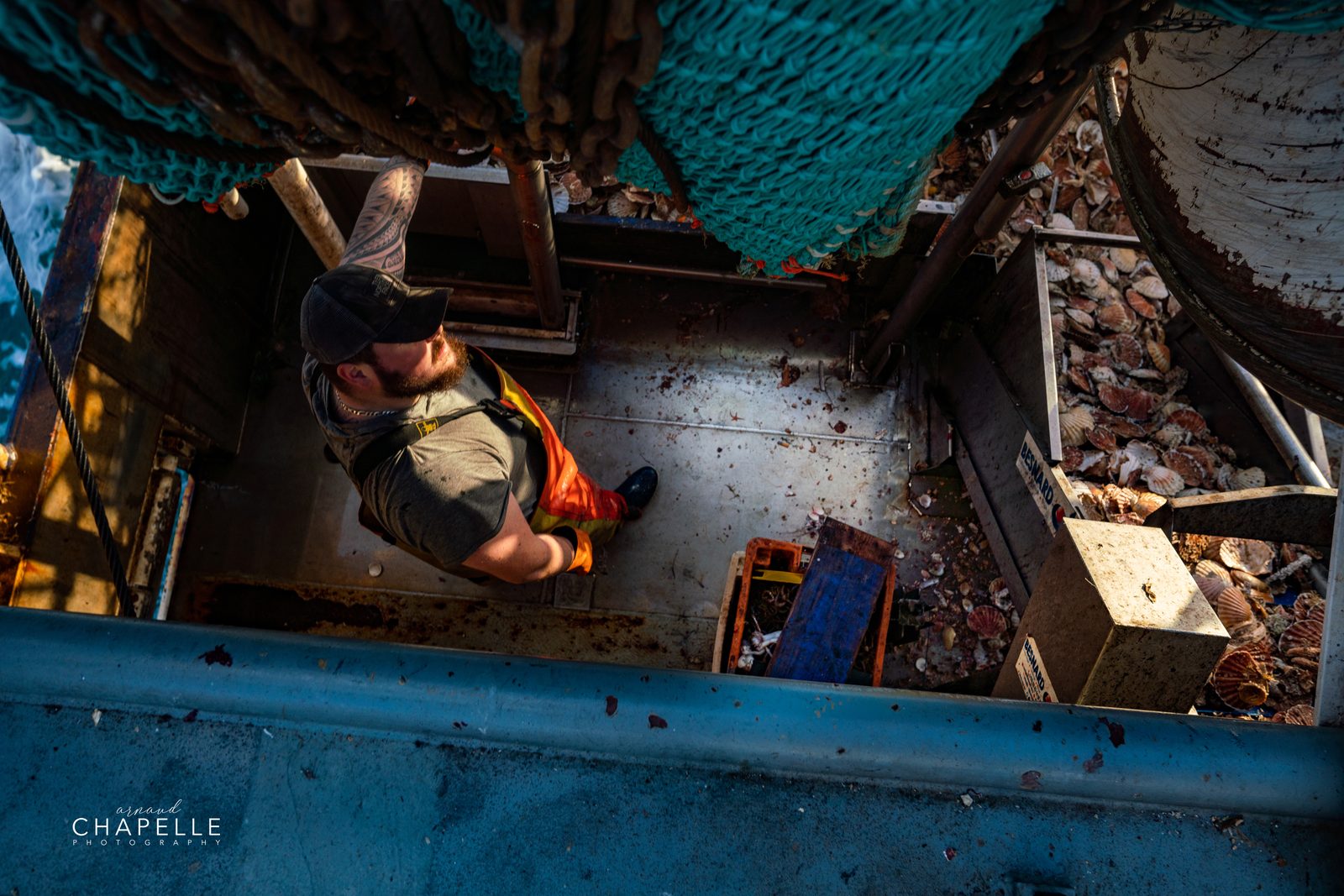
The scallops pour out onto the deck, mixed with fish, starfish and crabs. The noise is deafening. Water washes around the men's feet; they are already on their knees, sorting.
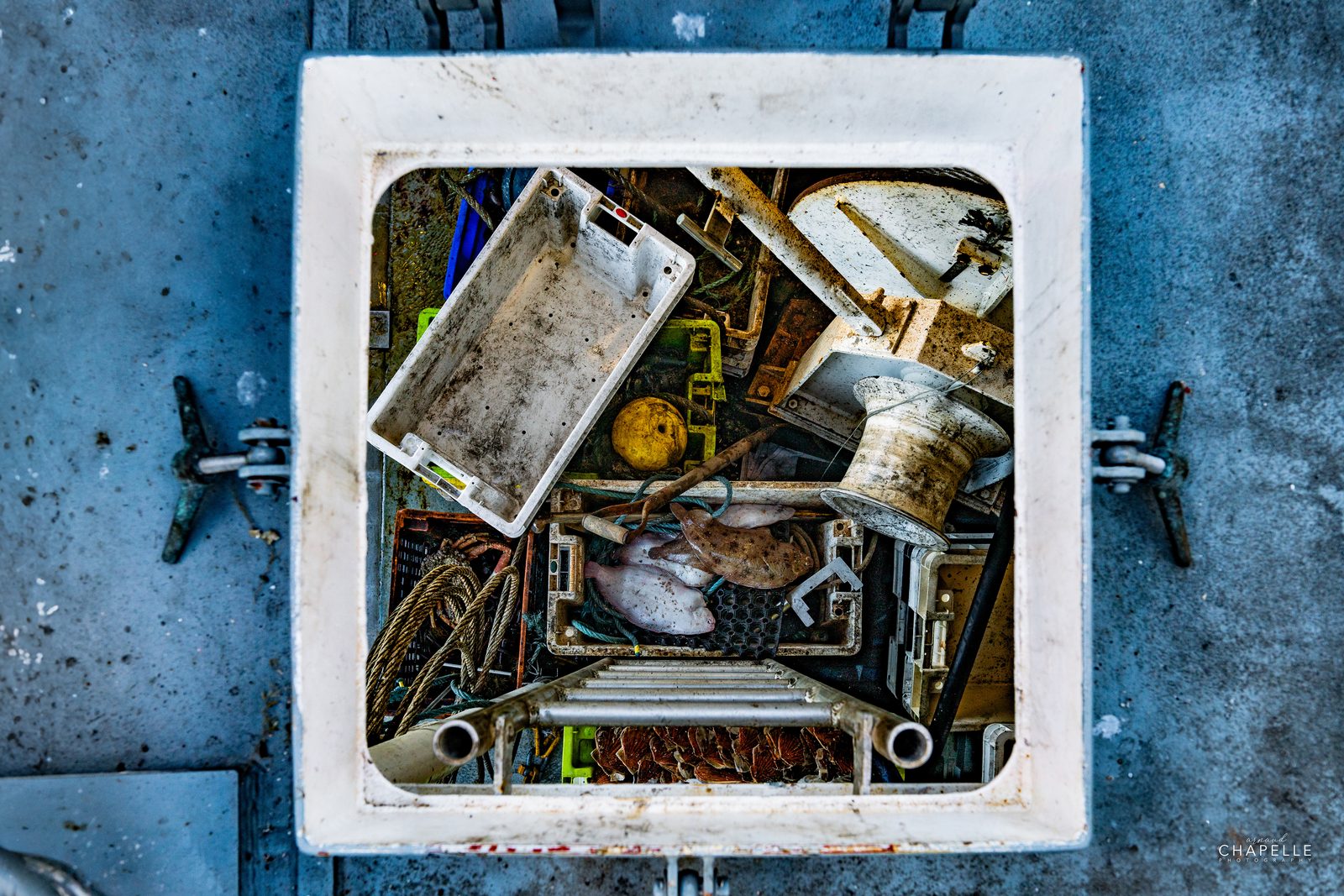
They have to be quick. The dredges go back over the side, and they have thirty to forty minutes to sort the catch, fill the baskets, take them down to the hold and clean the deck.
December 2017: at night, before the storm
I go out with them again. A storm is forecast for the next day. We leave Grandcamp harbour at 3 p.m., heading out off Vierville, for a night's fishing.
An hour after leaving, the boat starts to dance, and so do I. Photography becomes a sport: one hand to hold on, the other to press the shutter. The men stay on their feet as if their bodies were one with the boat.
Night falls. The other boats become fireflies dancing on the sea. In the darkened wheelhouse, only the instruments throw blue and red light onto the weathered faces. Outside, the music of the falling scallops rings like cymbals.
That evening they are only allowed three hours of fishing, and they will not reach their quota.
Landing the catch
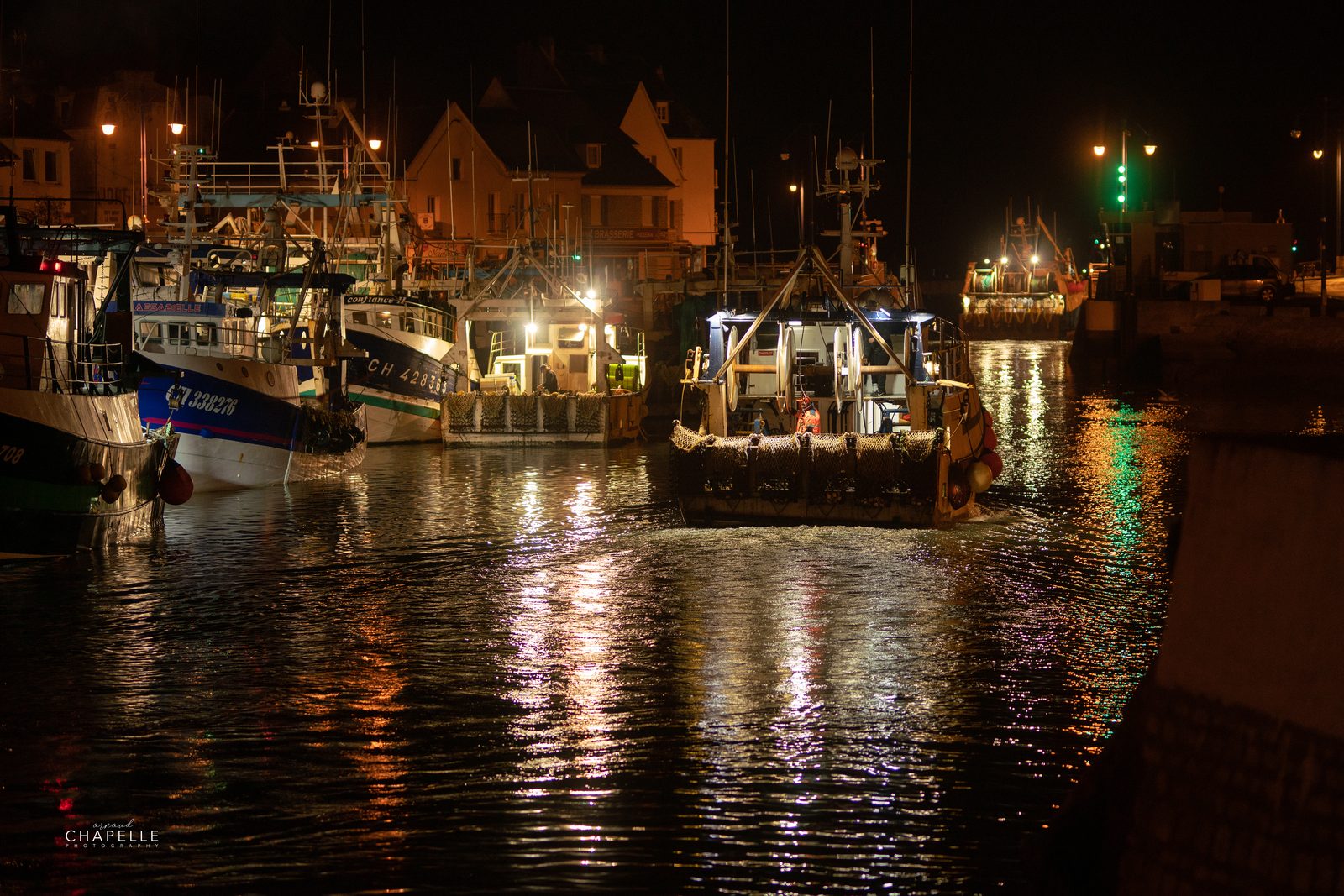
We have to wait for the tide to come back in: we will not enter the harbour until 1:30 a.m. Jean-Baptiste brings her alongside the way you would park a Twingo.
Baptiste hooks the baskets on three at a time, Clément hoists them up onto the quay. Stéphane and Franck weigh them and stack them on the pallets bound for the fish auction.
They know they will not be going out the next day: the storm is coming, with winds of 130 km/h.
2020 and 2022: back on board
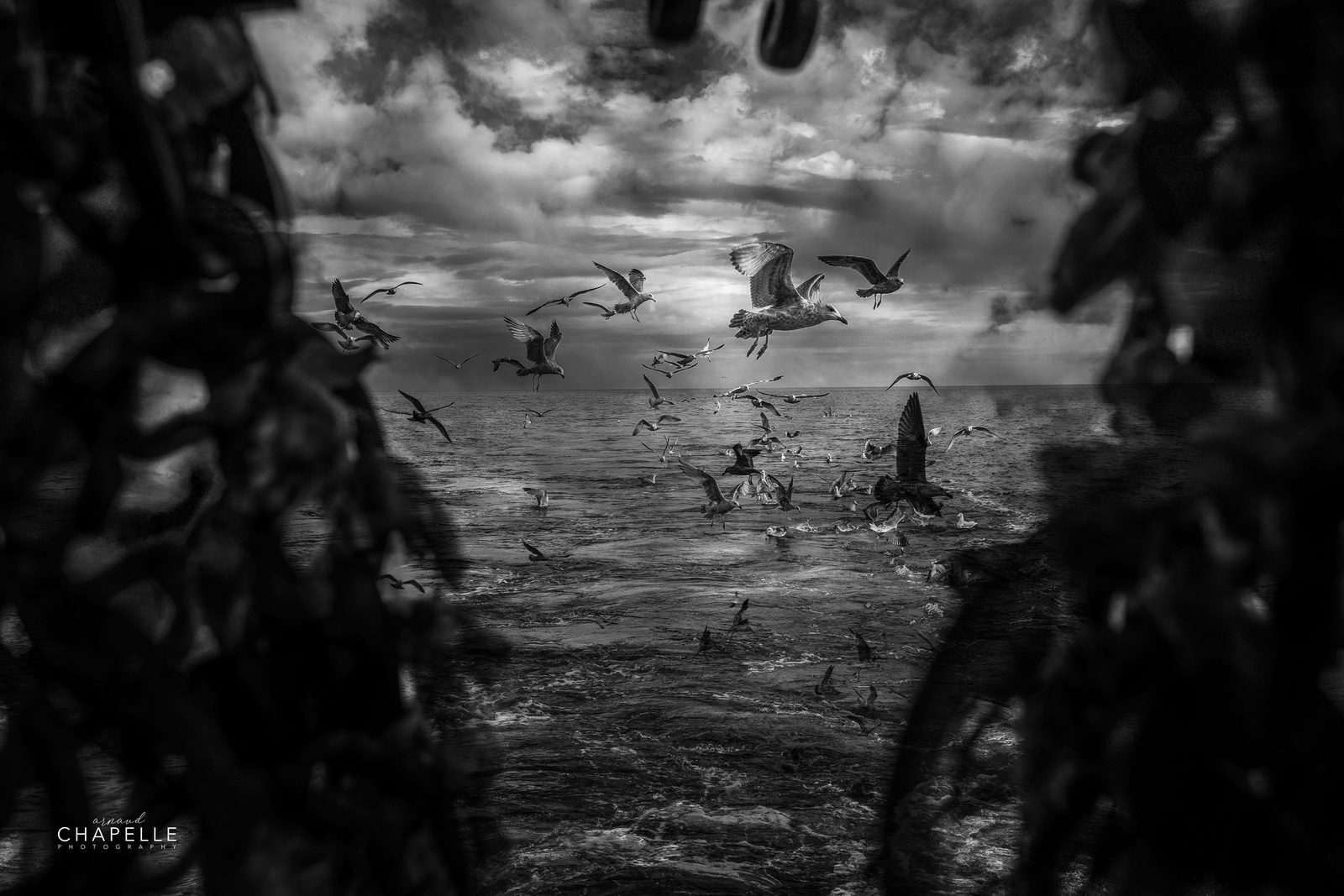
I went back aboard the Télémaque in November 2020, then in November 2022. The night departure from the quay, daybreak over the sea, the dredges against the sky, the sorting, the baskets going down into the hold: the pace, at least, has not changed.
Behind what is on our plate
All I would like is for us to think of them when we sit down to eat. Quality has a price: the price of courage, the price of work, the price of rain and wind, the price of the rolling sea, the price of sleep that is never quite sleep, the price of four- or five-day trips at sea, the price paid by the family.
Thank you to Virginie and Jean-Baptiste, who fight every day to have this trade recognised. And to Franck, Stéphane, Clément and Baptiste, exceptional men who go to sea the way others take holy orders.