Menuiseries du Cotentin · Port-Bail-sur-Mer · Manche
A business doesn't tell its story with stock images. It tells it with its workshop, its machines, its hands — and with what its clients make of the work once it is installed in their homes.
Since 1986, Menuiseries du Cotentin have been making made-to-measure kitchens, walk-in wardrobes, vanity units and fitted interiors in Port-Bail-sur-Mer. Fabrice, an industrial draughtsman by training, looks after the plans and the manufacturing. Véronique chooses the materials and tracks down what you can't find anywhere else.
I went to see them twice: a first day in the workshop in July, then a second assignment in September to photograph finished projects. The images were meant for their website and social media — in other words, to work every day, not to sit in a folder.
A workshop that looks nothing like you'd expect
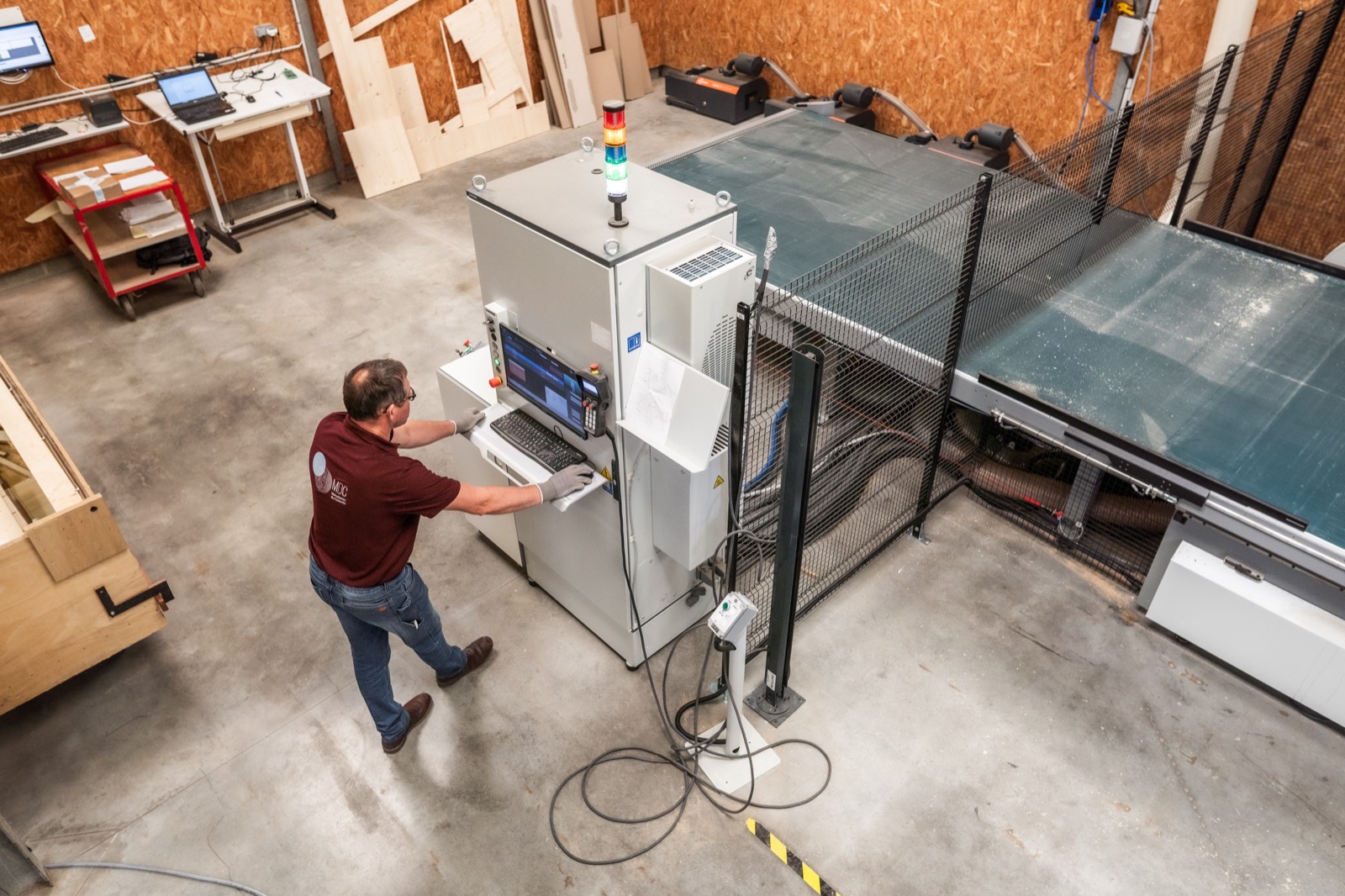
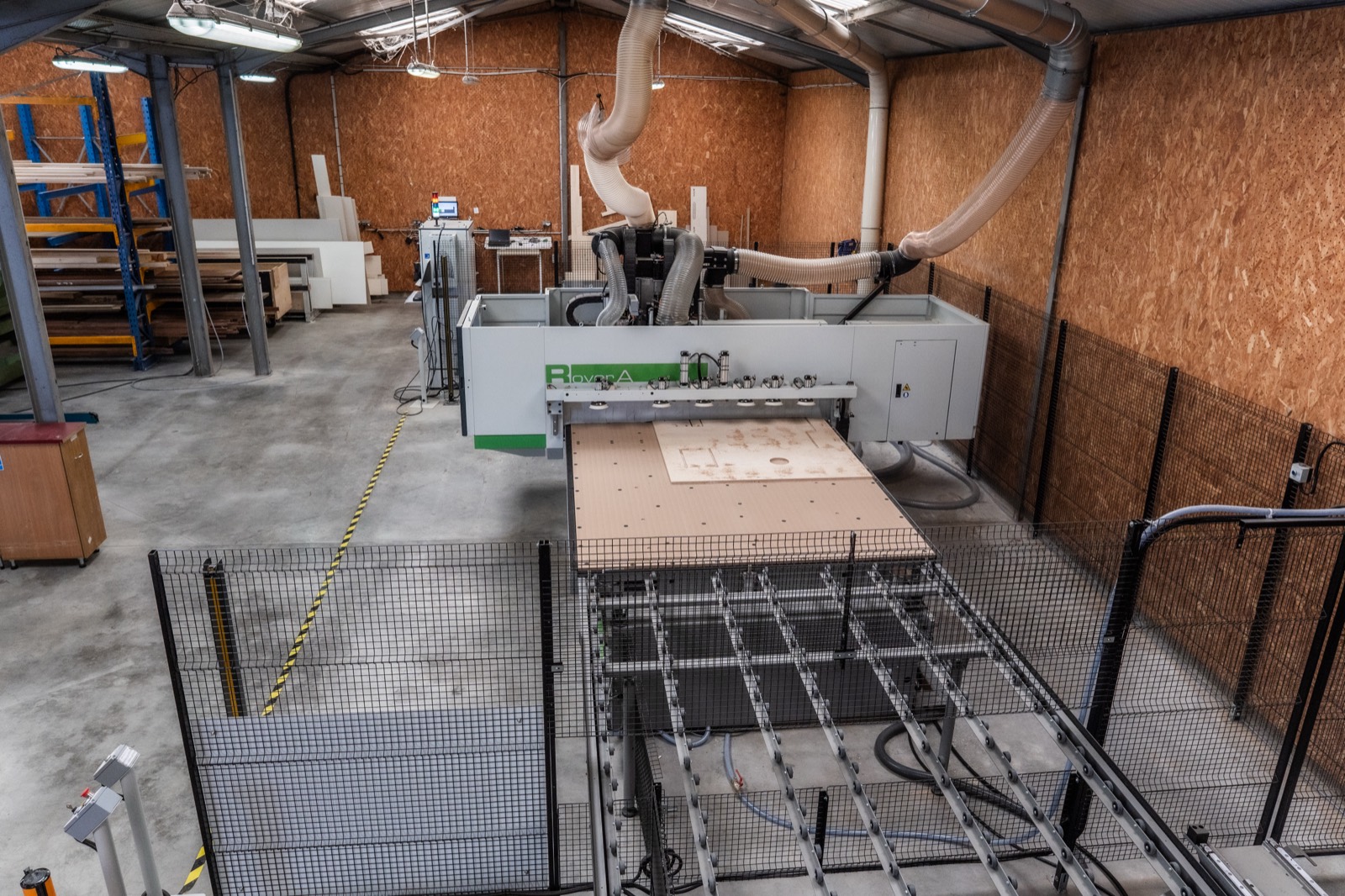
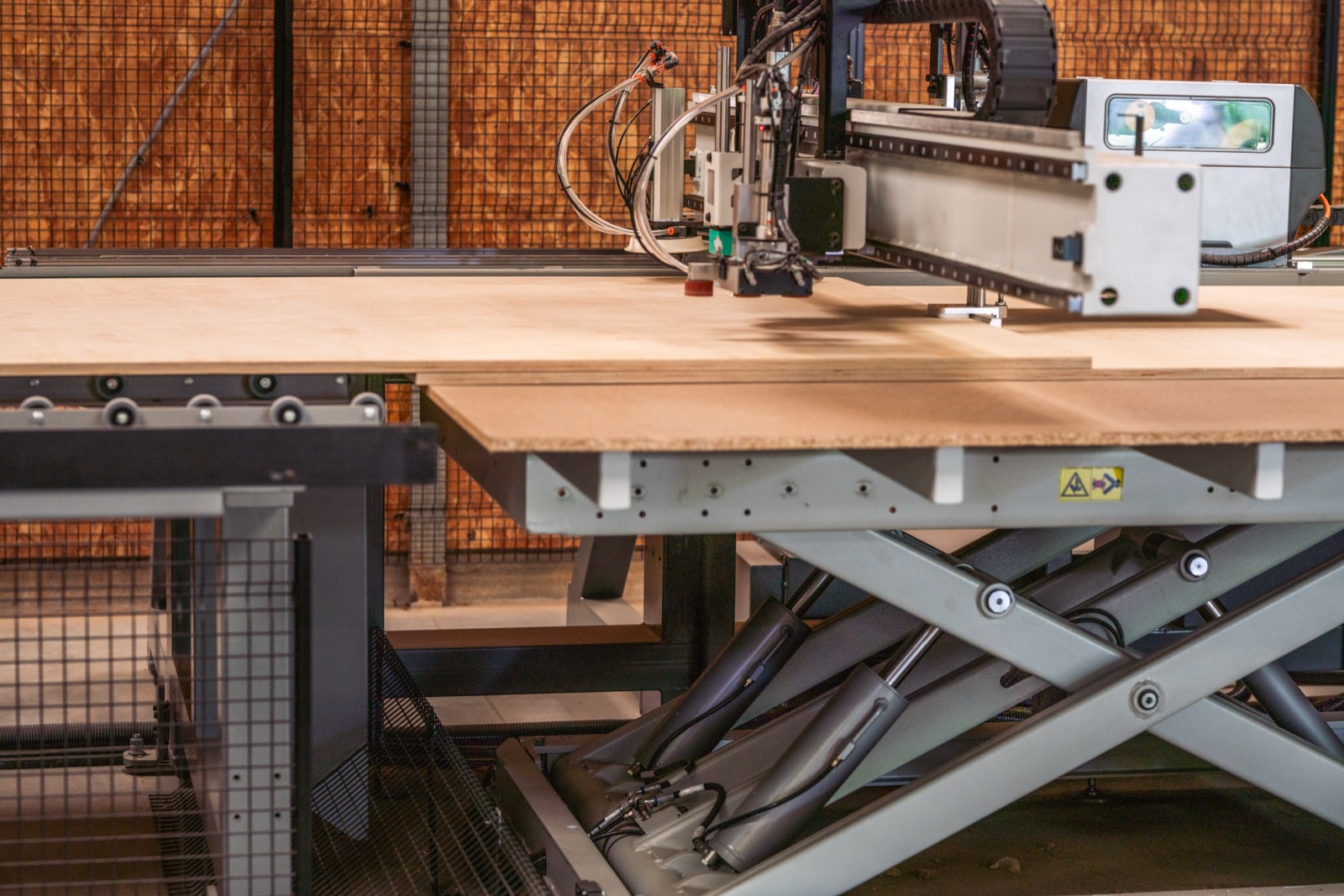
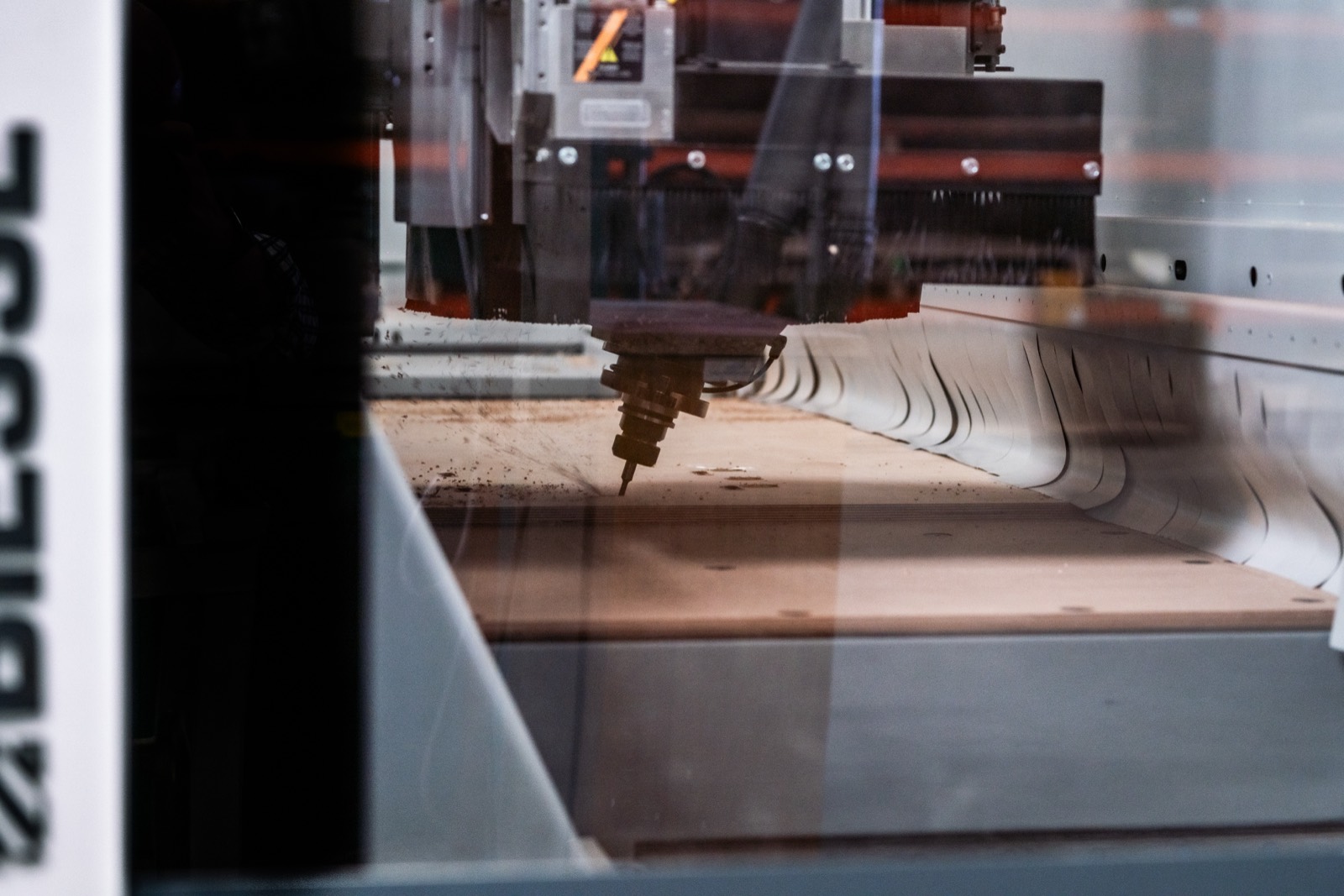
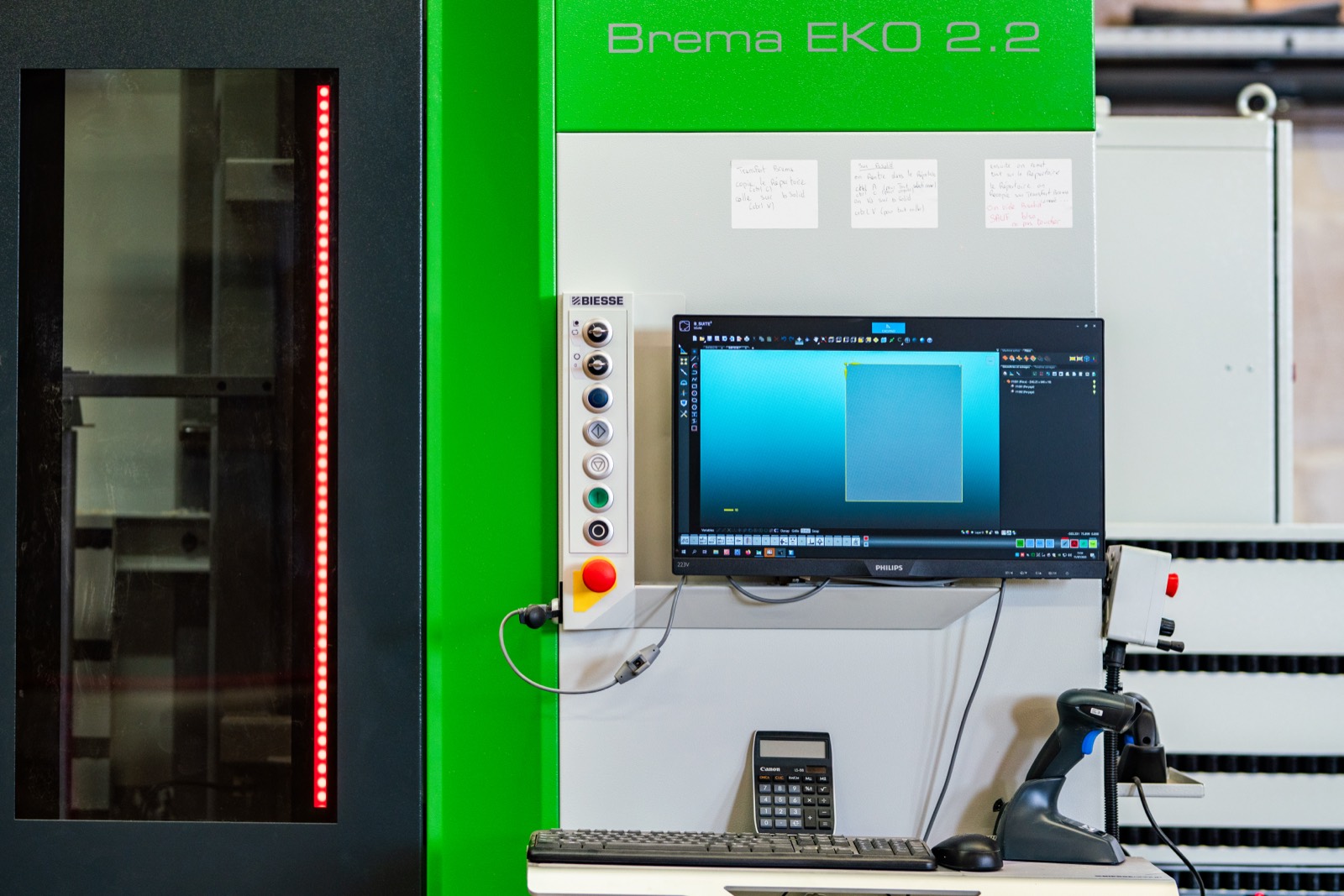
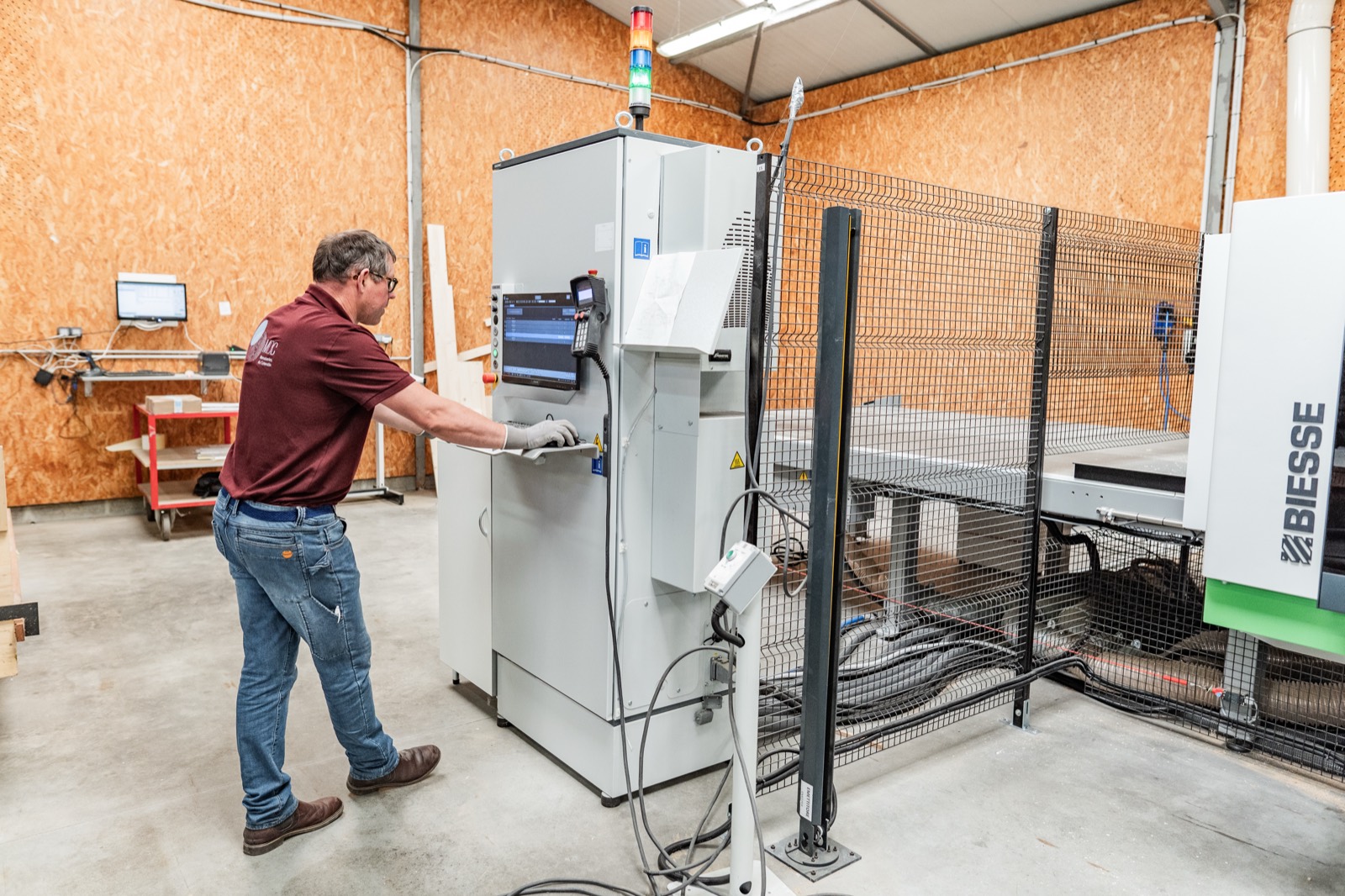
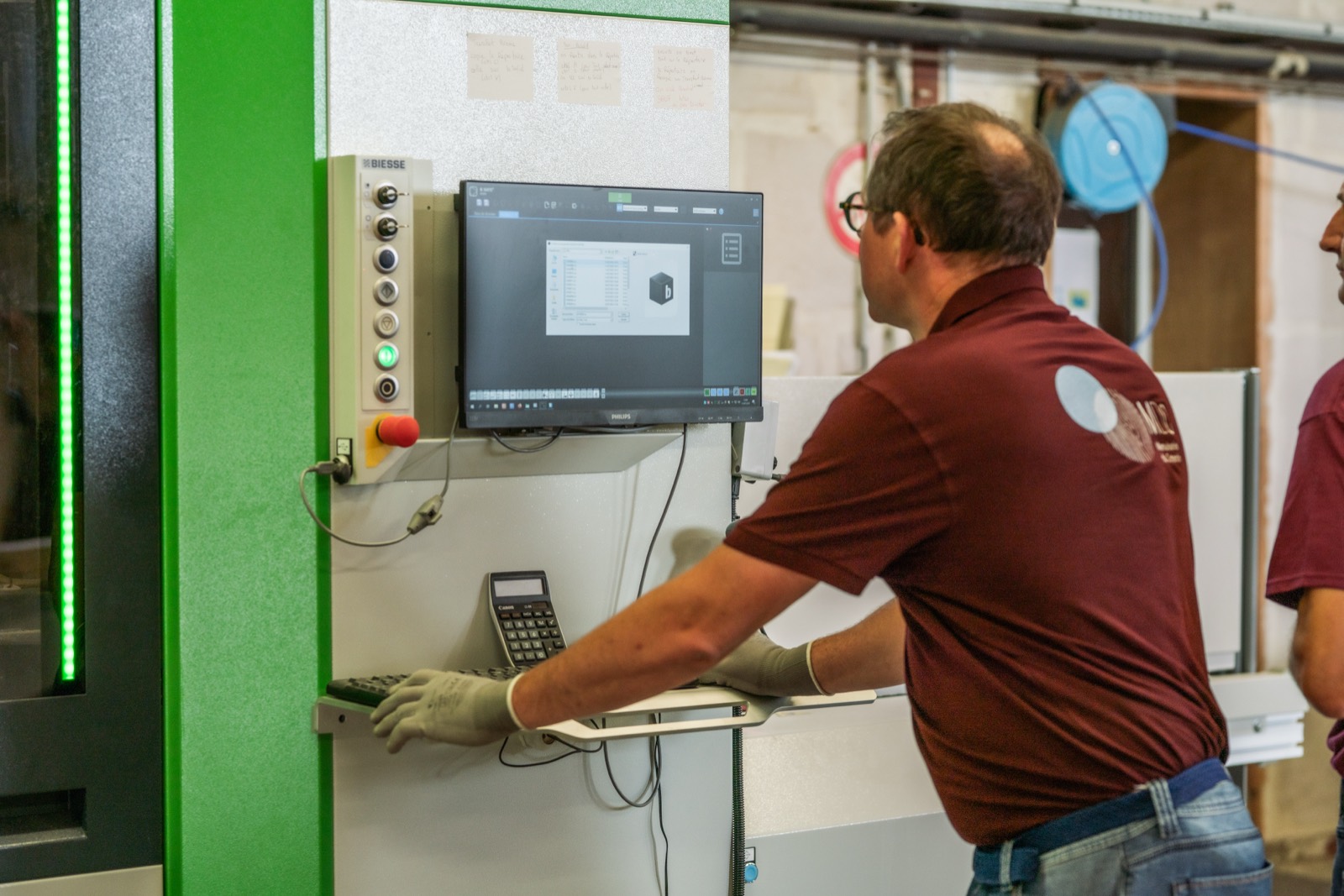
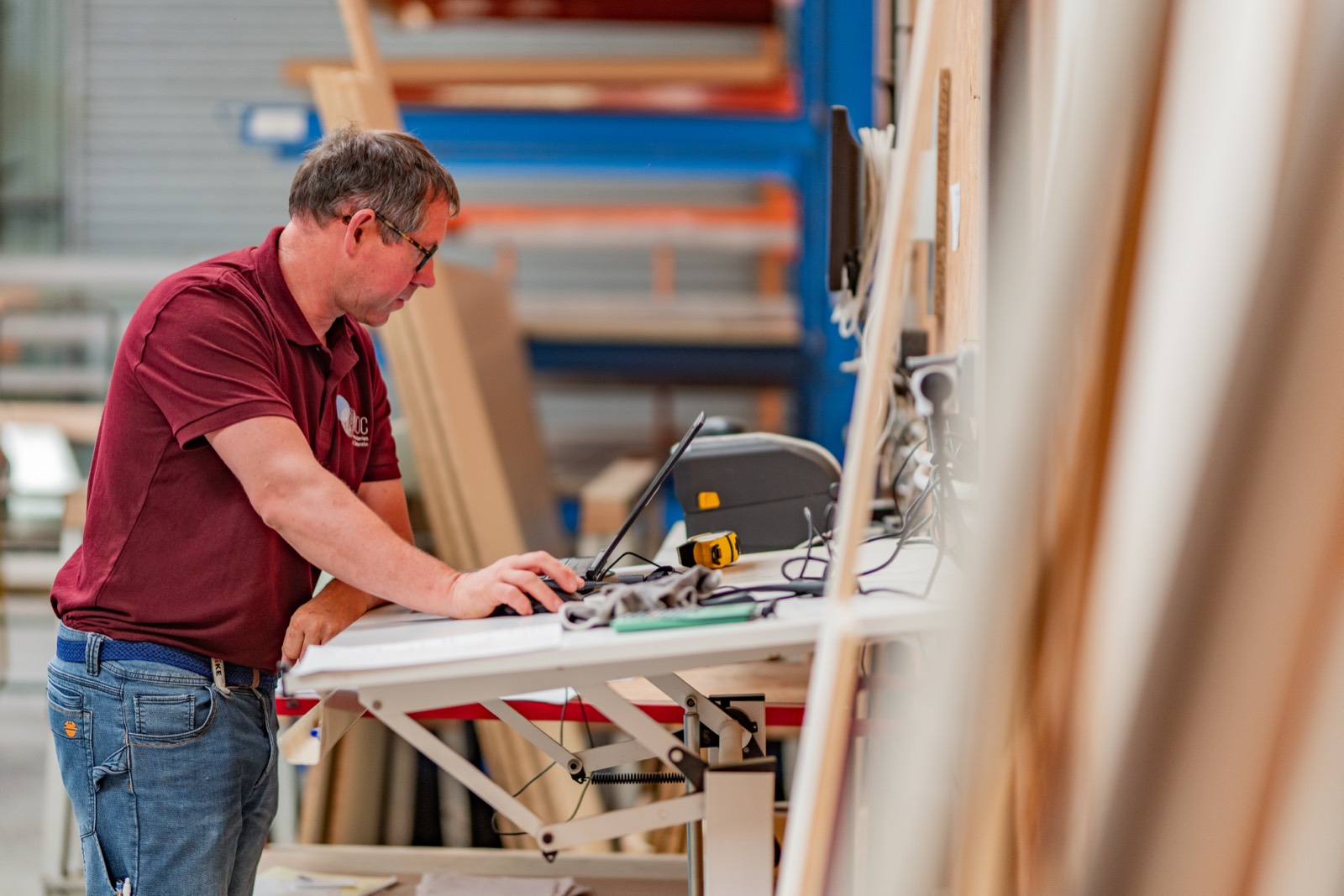
You picture a craftsman joiner with a workbench and wood shavings. The reality is different: a large, bright building, CNC machining centres, panels moving along rollers, and a control screen at every station.
This is something many businesses underestimate: their production equipment is a selling point. A client ordering a €15,000 kitchen wants to see the machine that will cut it. Images like these reassure better than any text.
The hand behind the machine
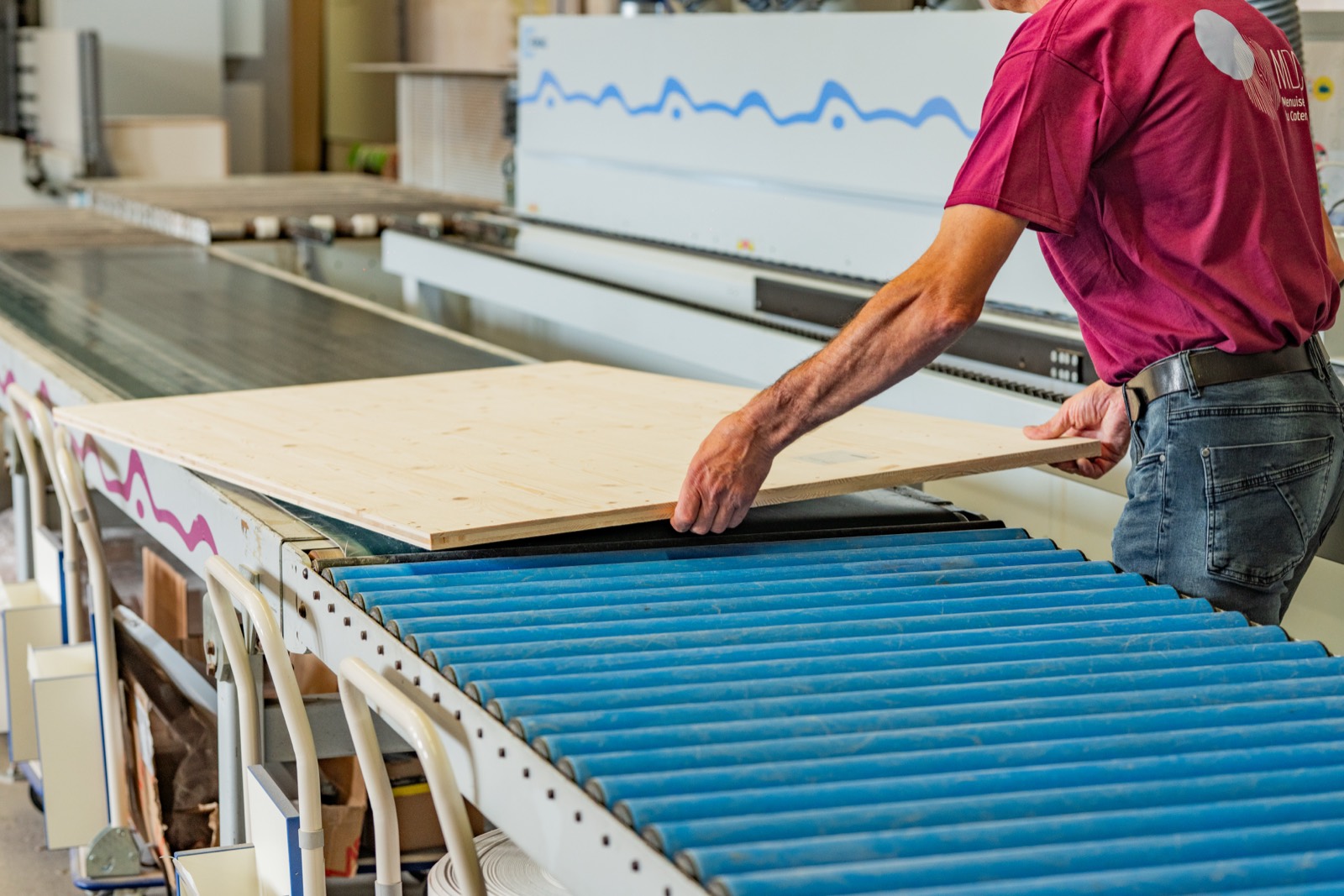
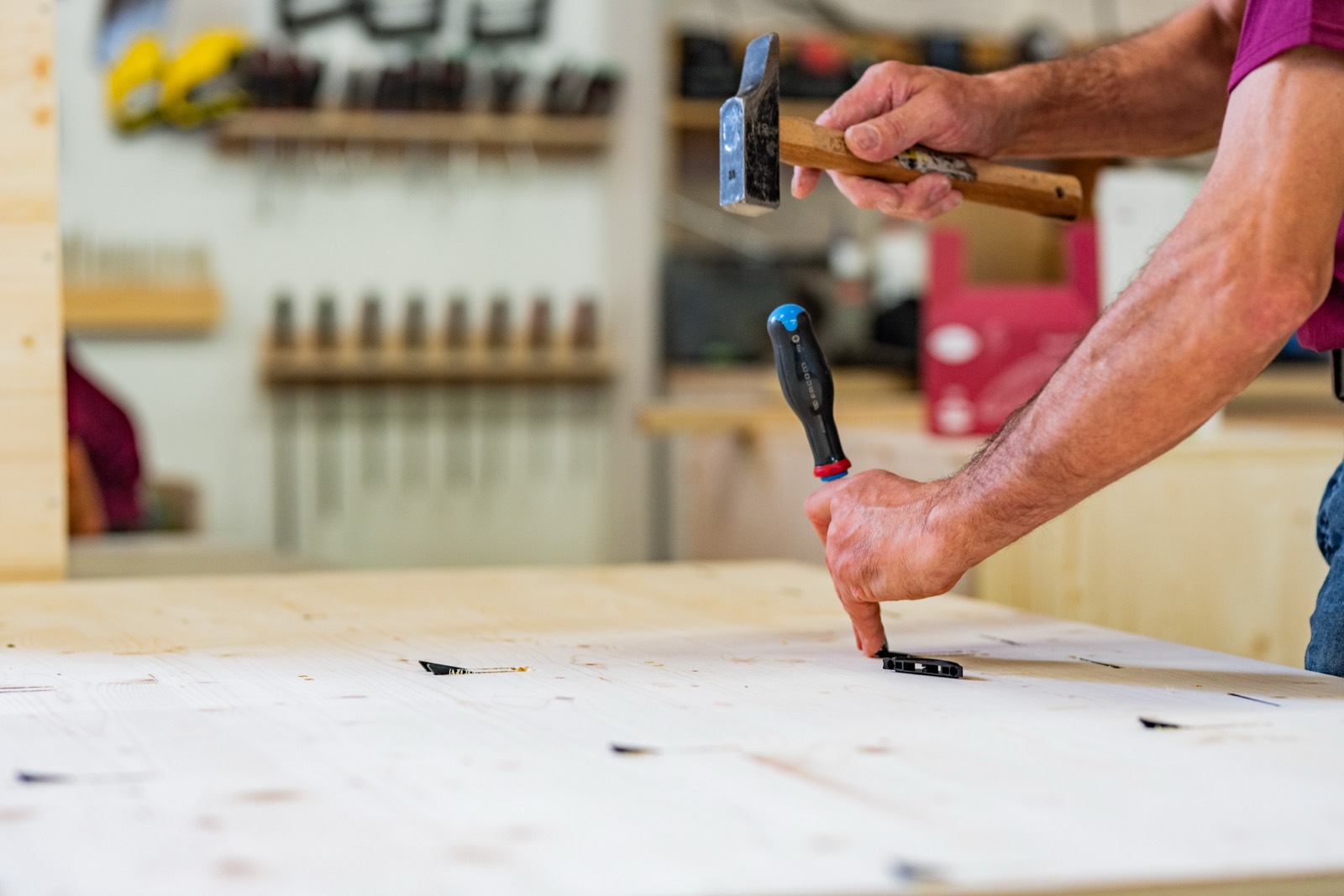
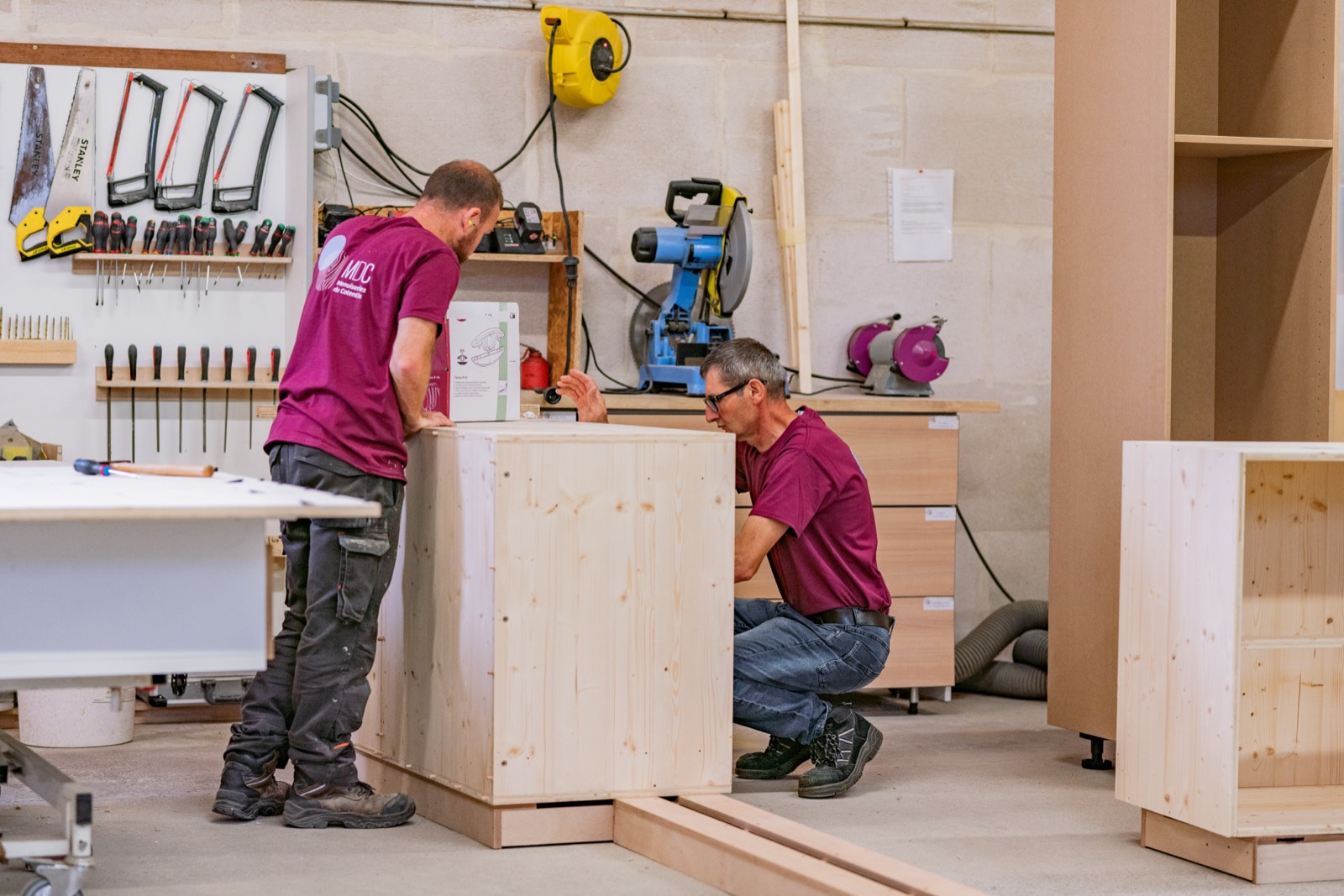
The CNC machine cuts. It doesn't assemble, it doesn't sand, it doesn't decide. Everything else is done by hand, and it is this contrast that makes a workshop photogenic: cold precision on one side, the human gesture on the other.
I work as a documentary photographer, staging nothing and never asking anyone to repeat a gesture. Production carries on while I photograph — it is the only way to get images that don't feel posed.
Then it goes to people's homes
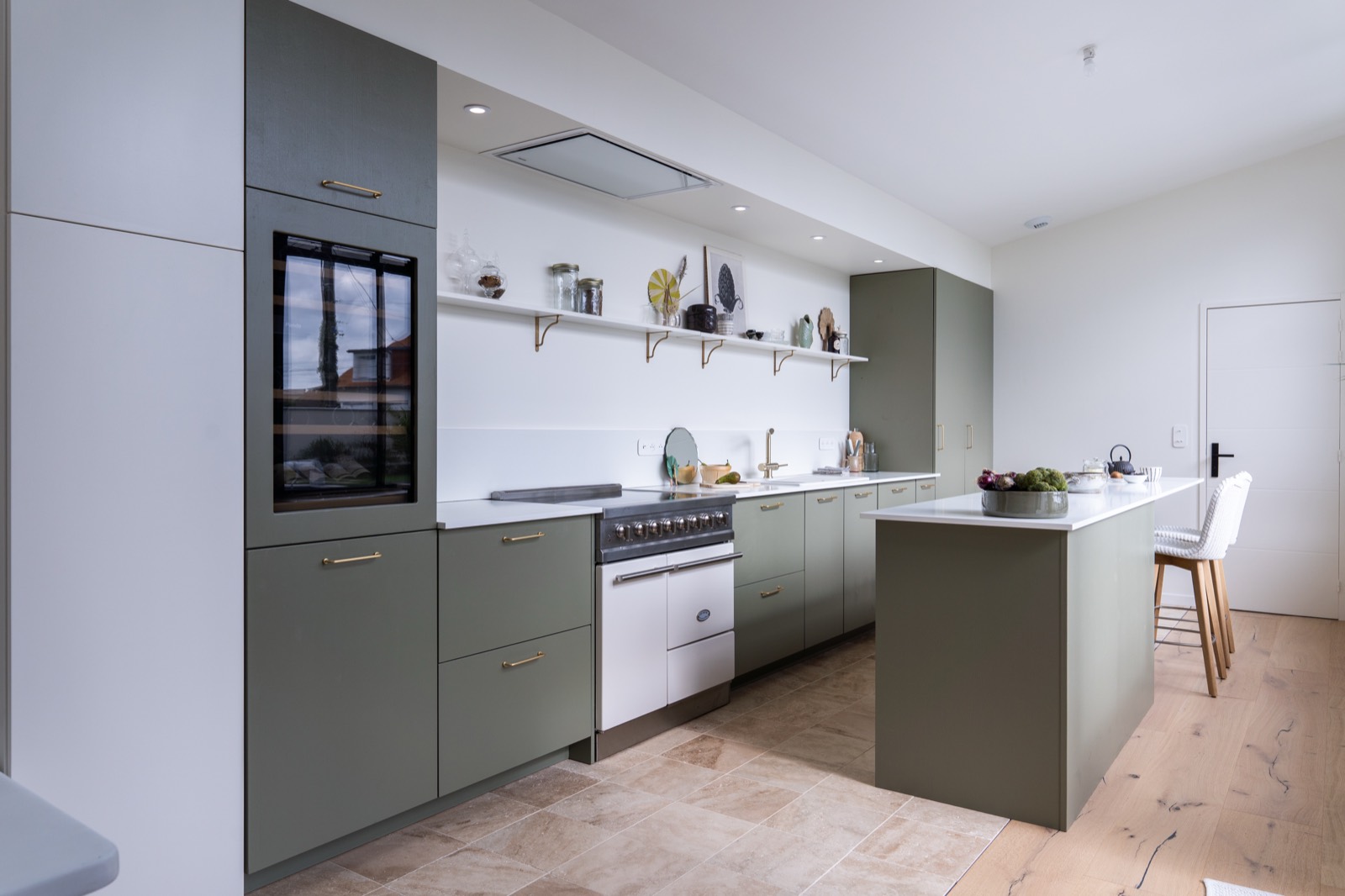
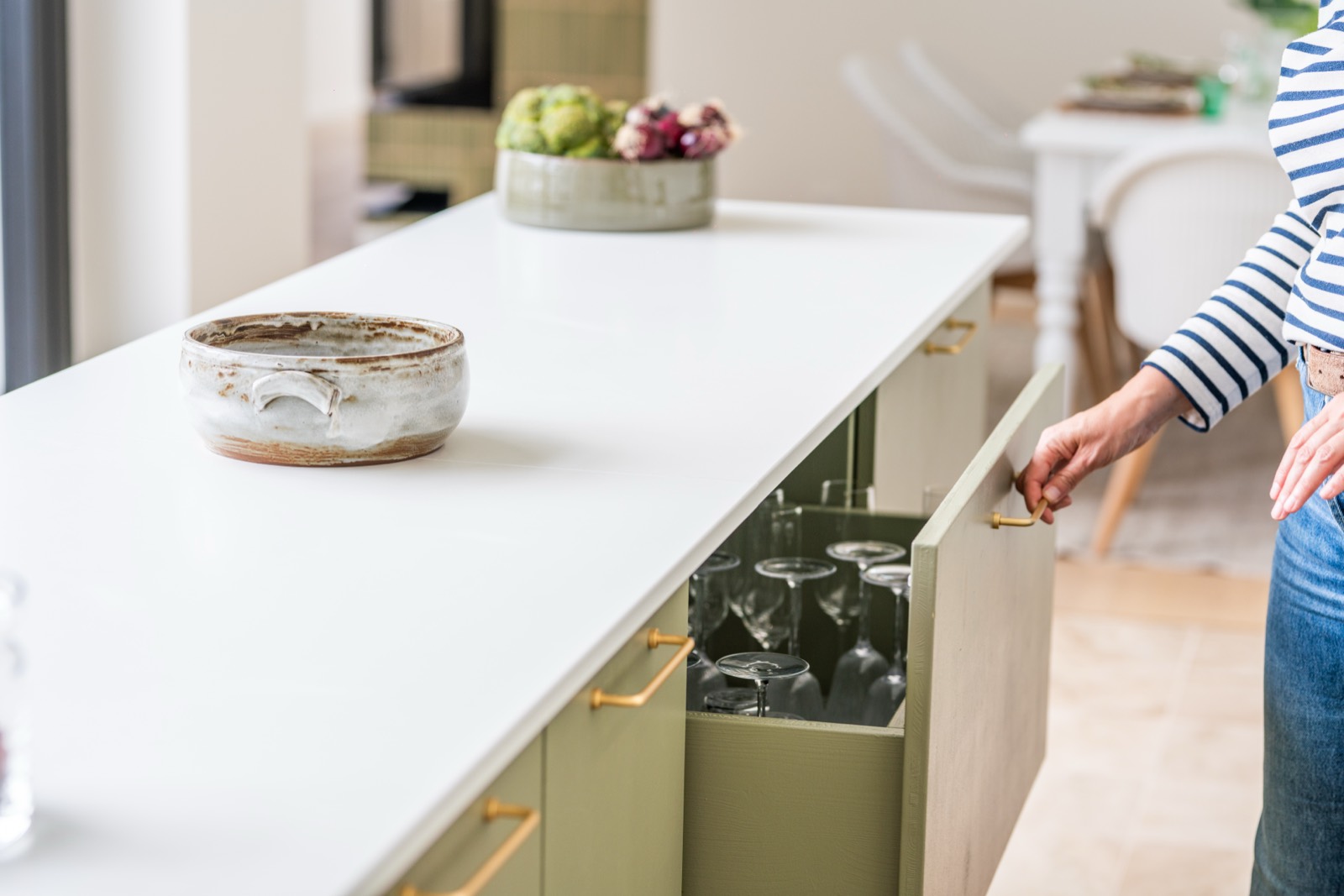
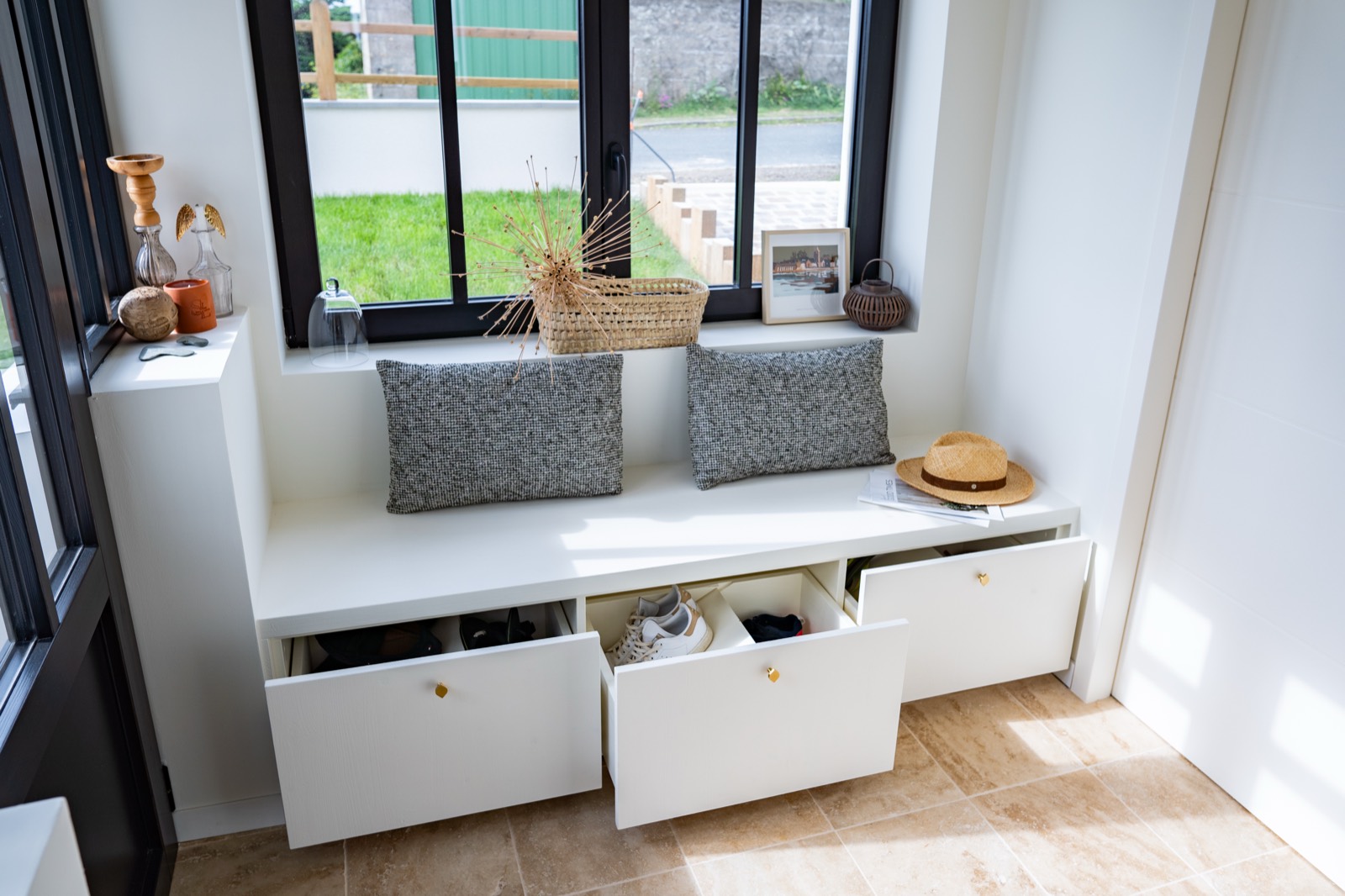
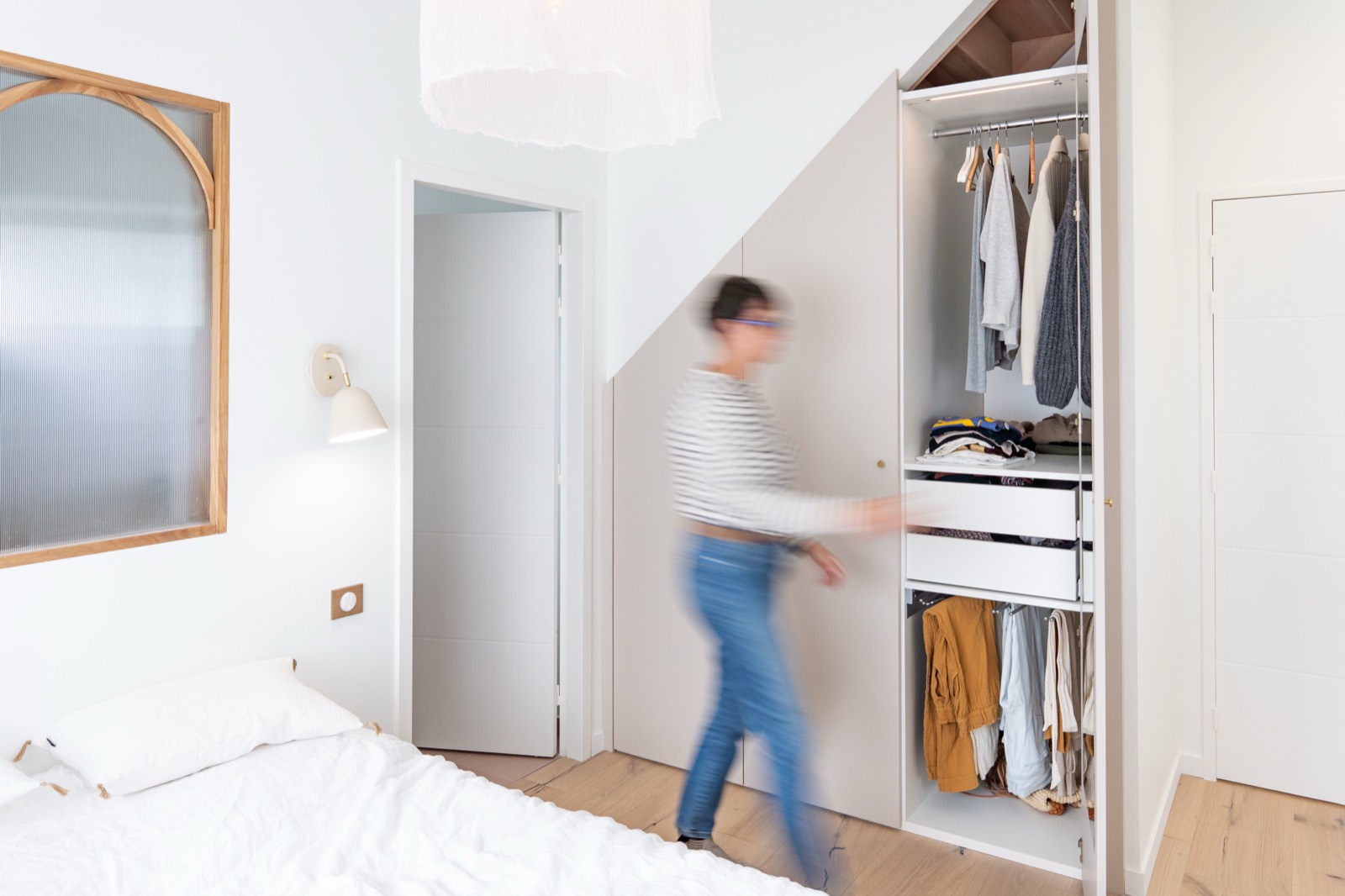
This is the half missing from almost every corporate photo story. We photograph production and forget the result. Yet what a future client wants to see is not just a machine: it is what they will have in their own home.
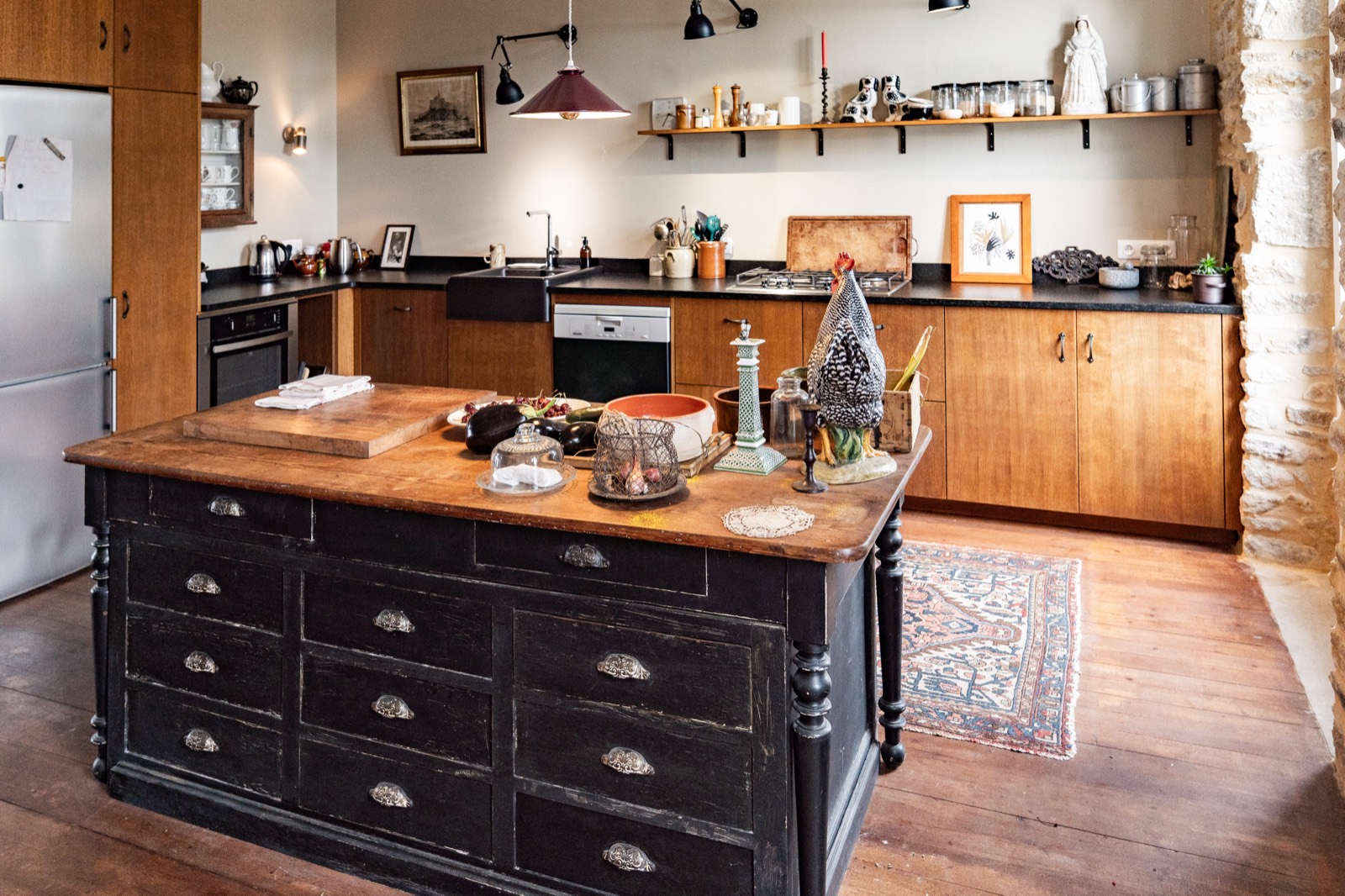
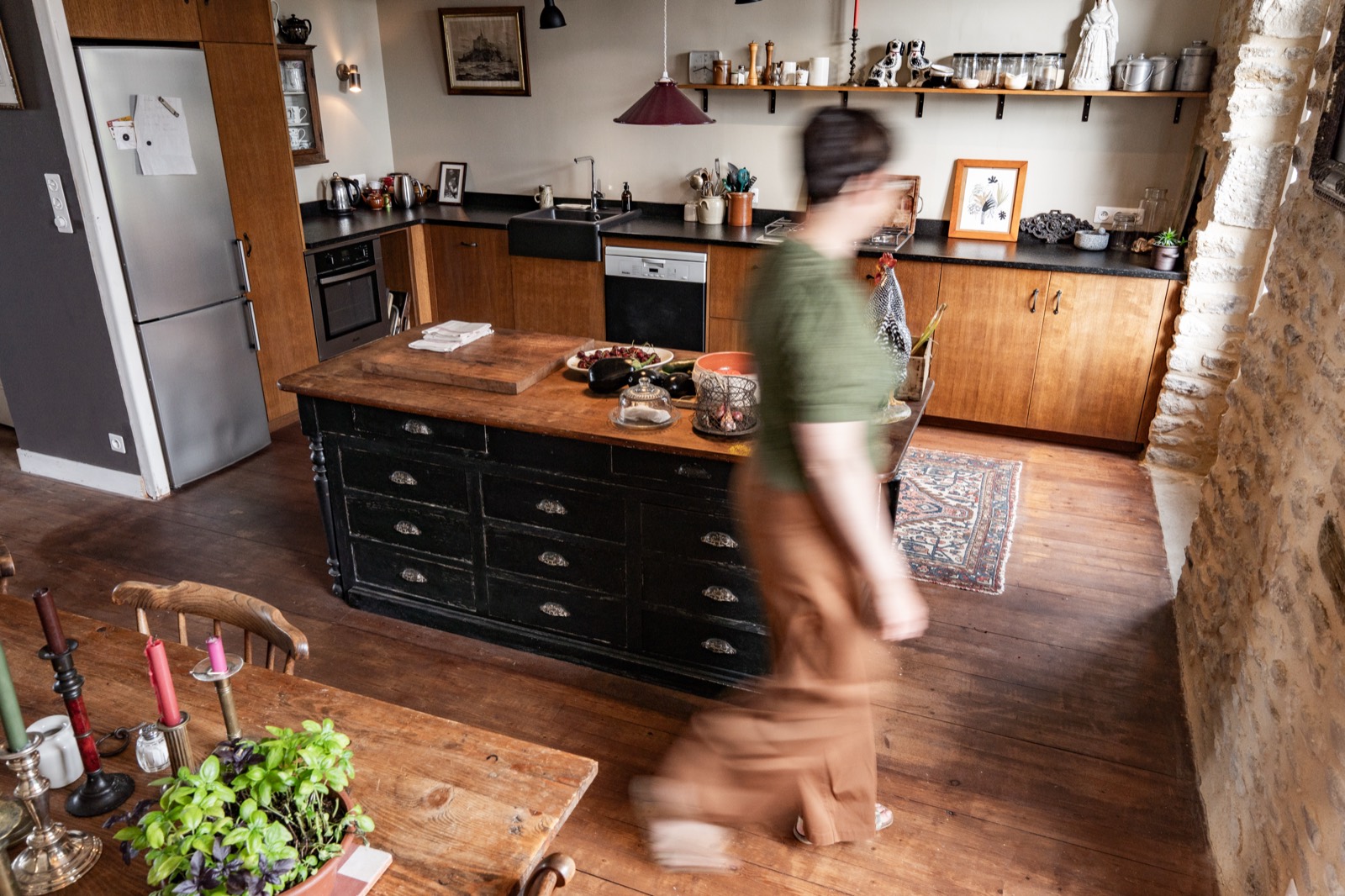
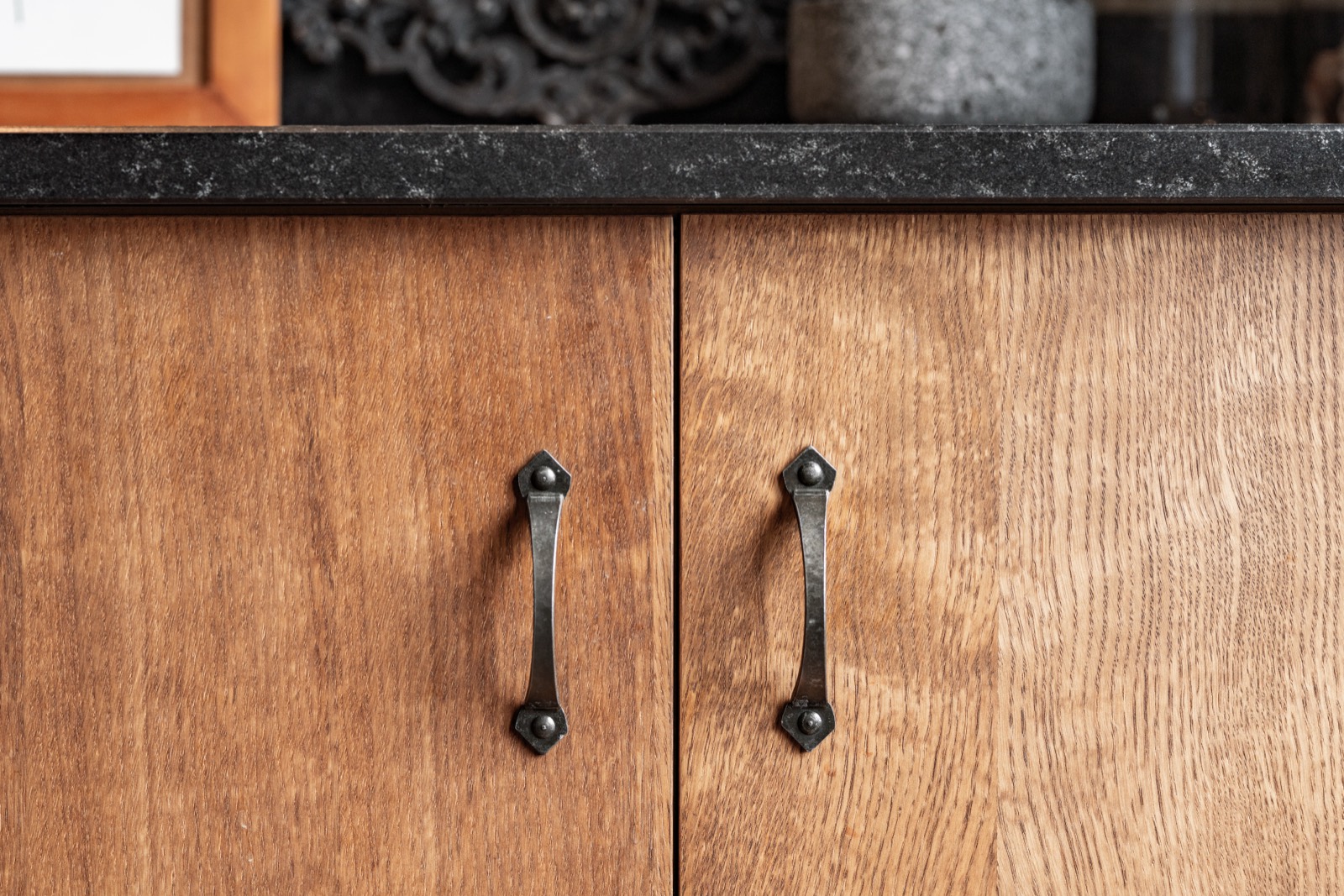
First project, in a stone house: dark worktops, wooden fronts, wrought-iron handles, and an old draper's counter turned into a kitchen island.
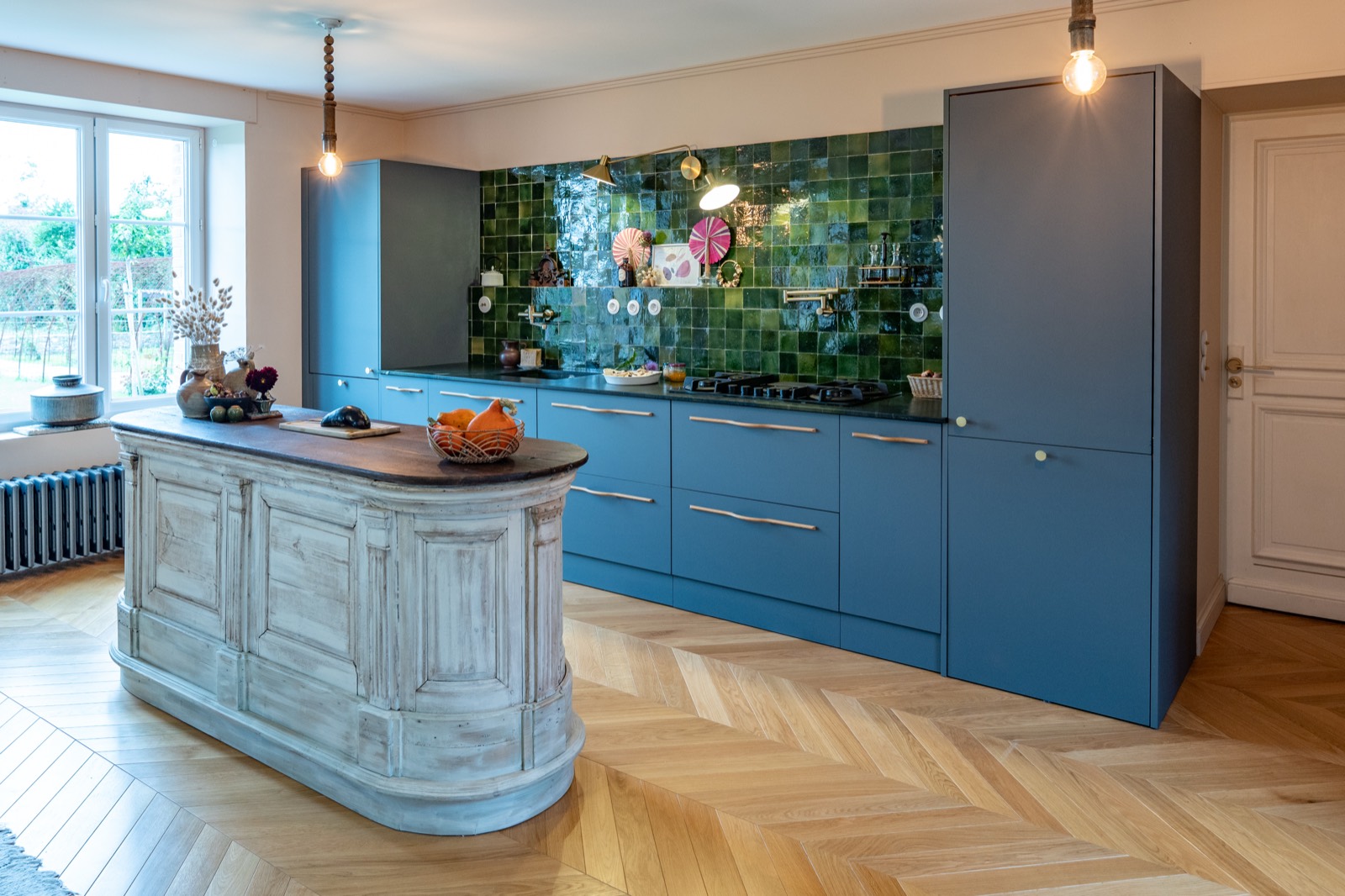
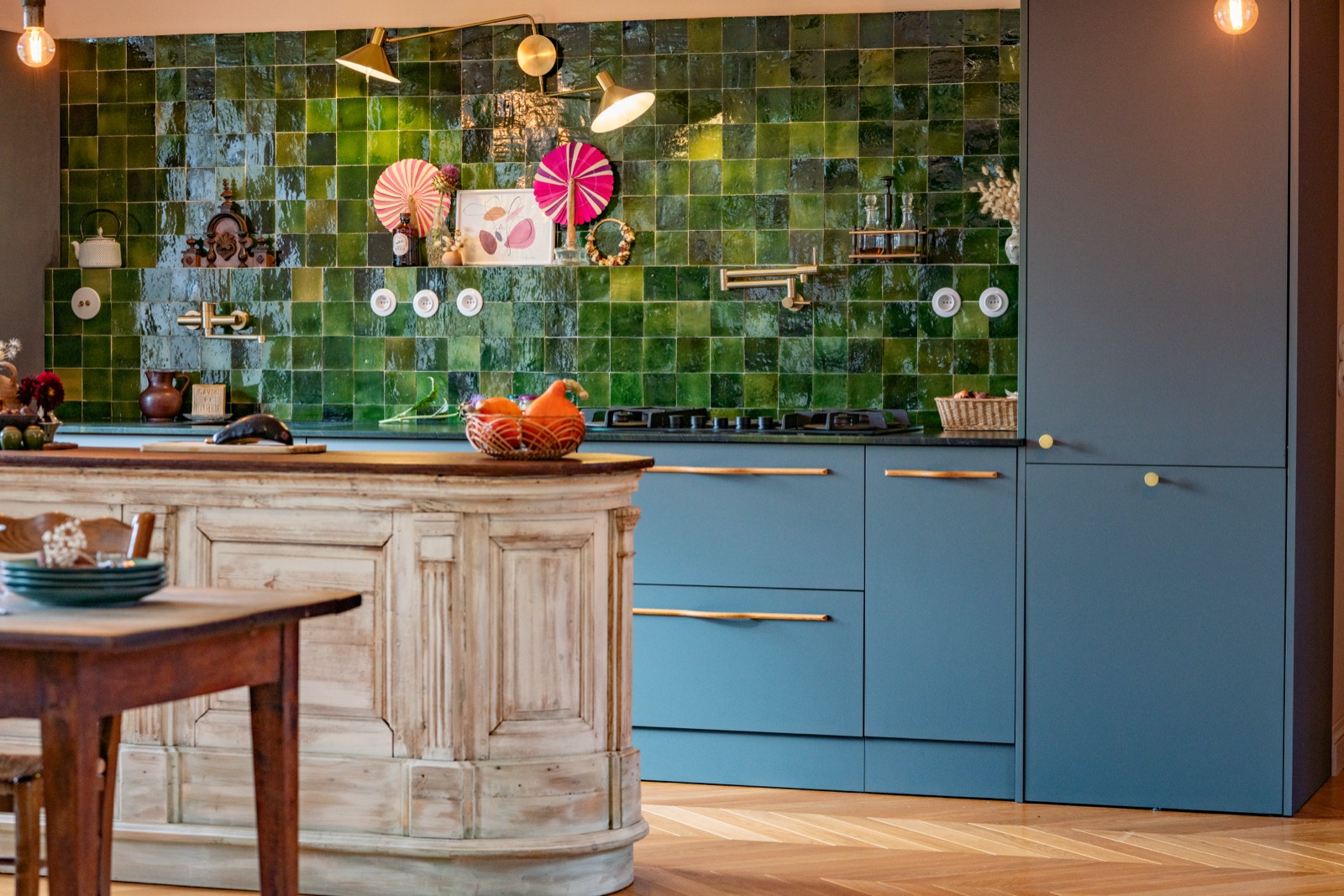
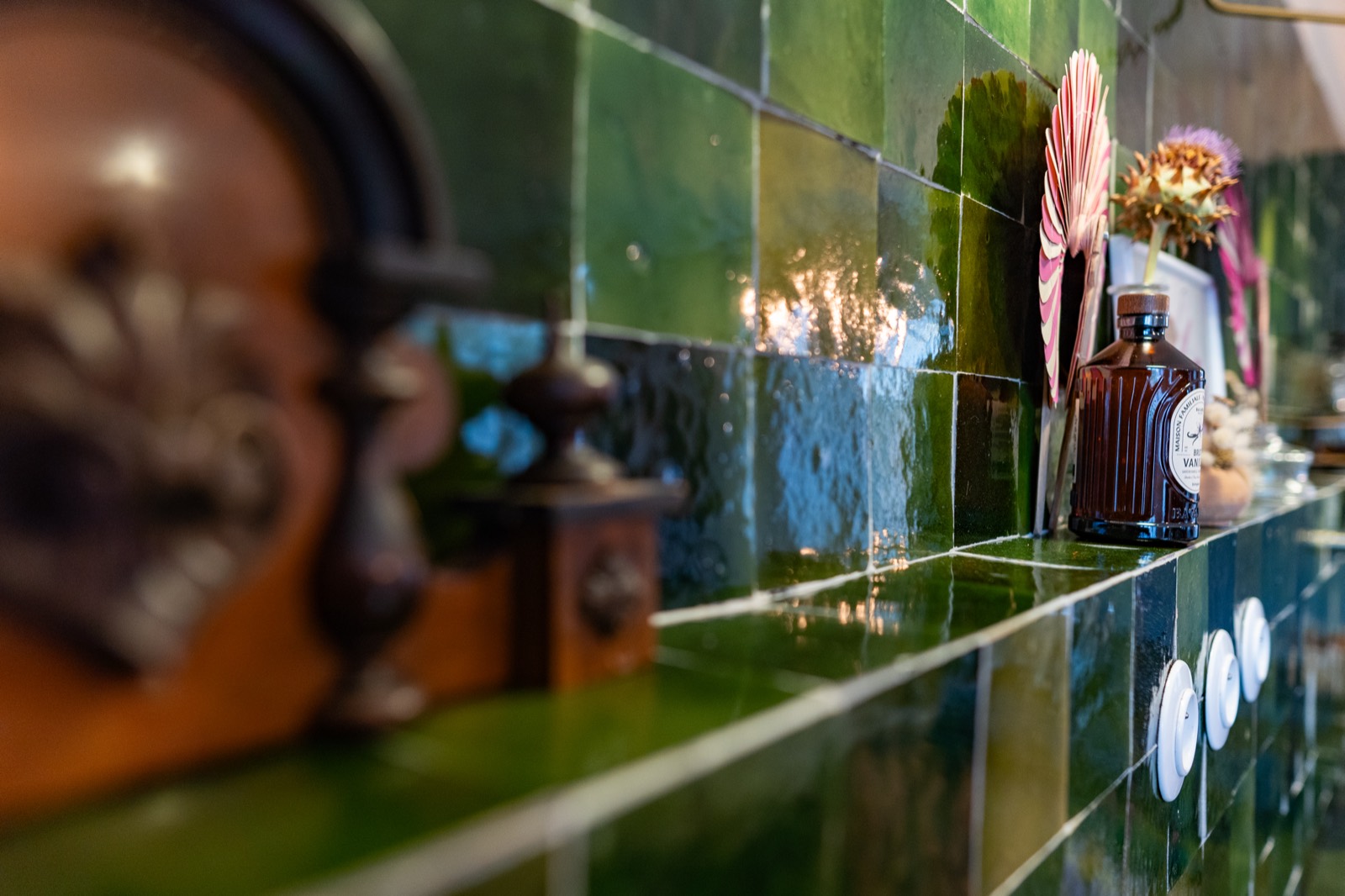
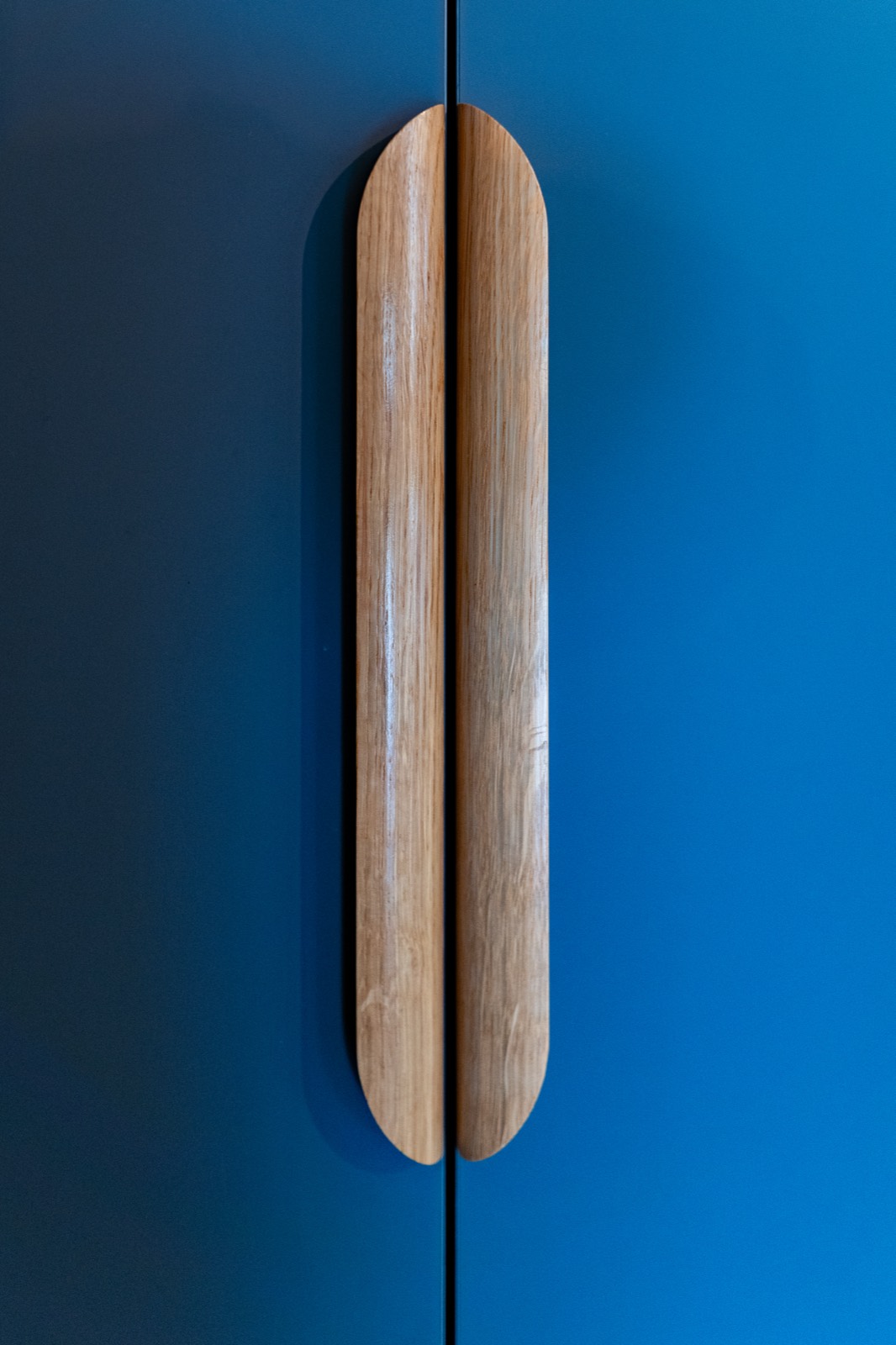
Second project, in a completely different register: a deep blue kitchen, a splashback of green zellige tiles, brass, and herringbone parquet. Same workshop, same team, two worlds that have nothing in common — that is exactly what made-to-measure means, and images make the point far faster than paragraphs.
Why I came back three months later
The first day covered the workshop and one project. The second, in September, covered projects completed in the meantime. It is a way of working I recommend to every business I photograph, for a simple reason: a business doesn't stop on the day of the shoot.
A single session gives you a stock of images that ages. Two or three visits a year give you an image bank that keeps pace with what you actually produce: new projects, new materials, new people joining the team. Your social media has something to post all year round without recycling the same photos.
What the assignment covered
Two days, three months apart — the workshop first, the finished projects next.
The production equipment: the workshop, the machining centres, the workstations.
The craft: assembly, hands, materials — with nothing staged.
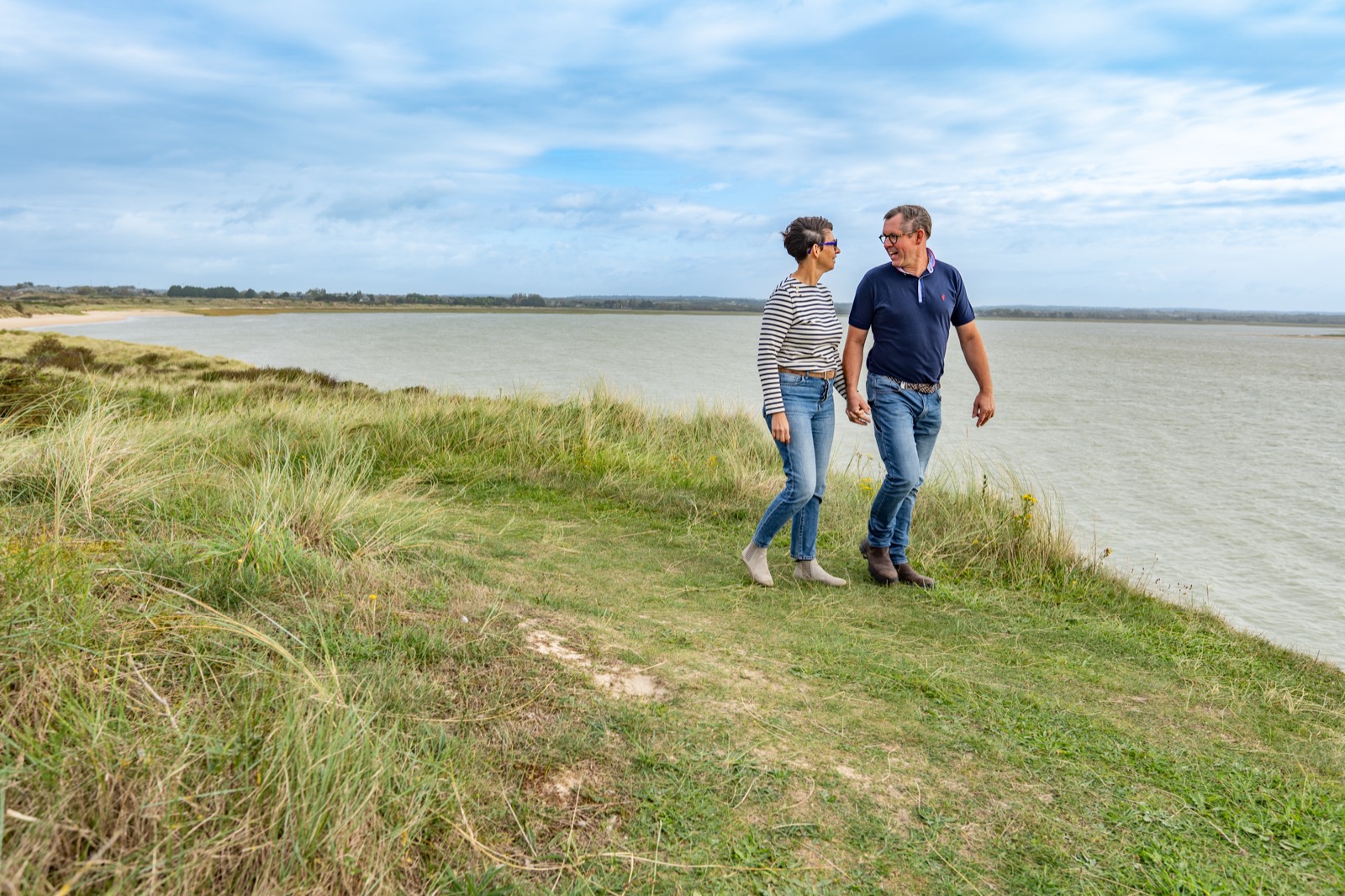
The owners, in the workshop and on their home ground.
The finished projects, photographed in clients' homes with their consent.
HD delivery, free to use on the website, social media and printed materials.
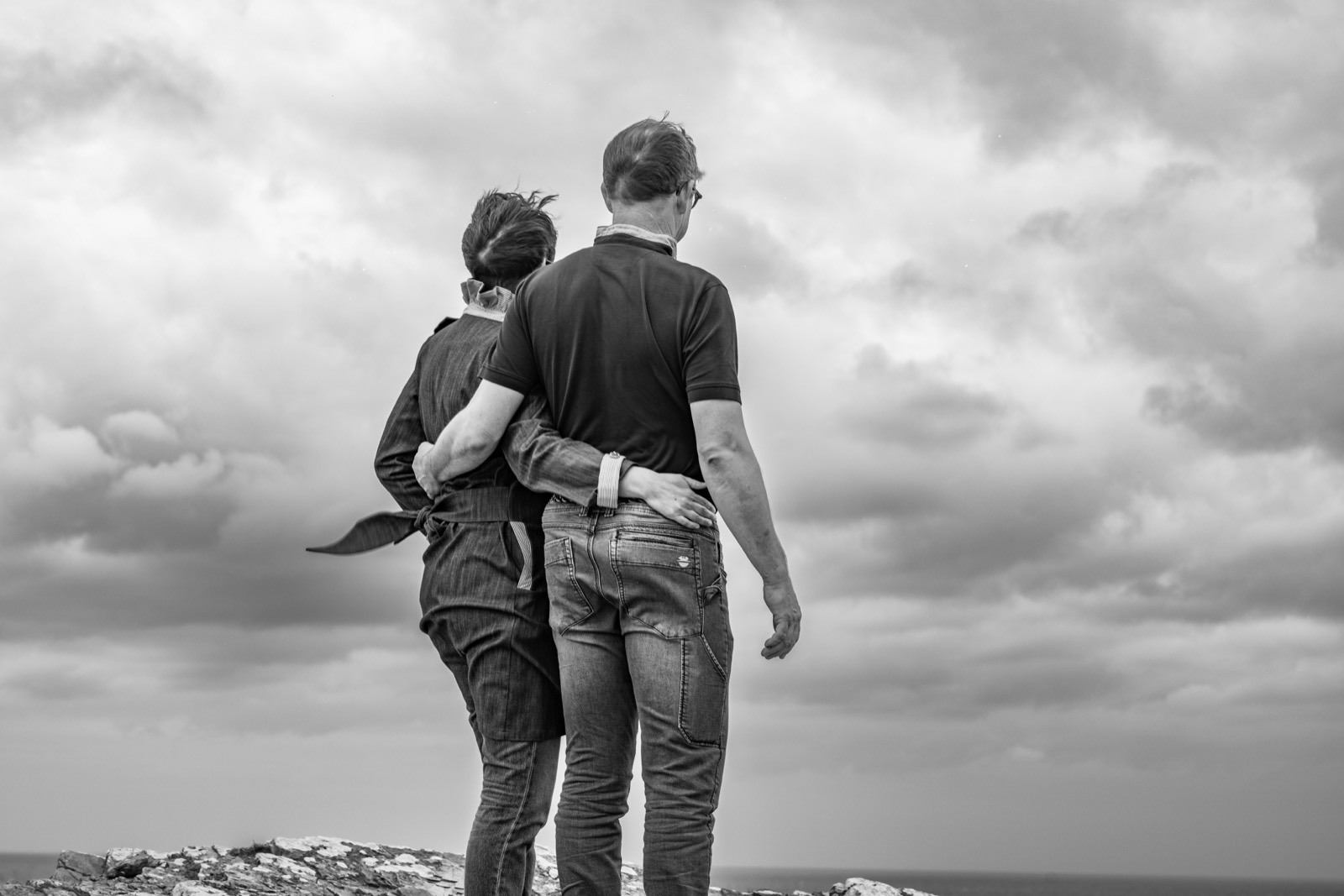
Two people, one company
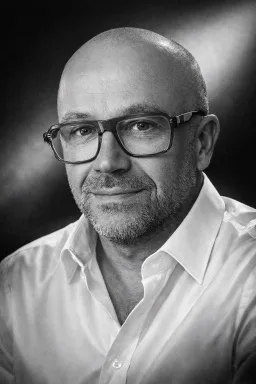
A family business is first and foremost people. Fabrice and Véronique have run this one for decades, on a coast they have never left. These two images show neither machine nor kitchen, and yet they are the ones that say the most.
Thank you to Fabrice and Véronique for the access to the workshop, the trust and the coffee. You will find some of these images on their website and their Instagram account — which is exactly where they were meant to end up.